
by Roseanna White | May 19, 2014 | Word of the Week
The honking of a family of geese wandering down to a nearby pond at 5:30 this morning was inspiring, what can I say? 😉
Goose, meaning the water fowl, is not surprisingly old–really old, as old as English. Interestingly, the word’s roots were not only for a goose, but for a swan, and is believed to be imitative on their honking.
From the 1540s onward, it’s carried a meaning of “simpleton” when applied to a person. Gooseflesh or goose skin (goosebumps) are from 1795 (for the skin variety) and 1810. From what I can gather, it comes from how a plucked fowl looks before you cook it. The more modern bumps variety didn’t come around until 1919.
As a verb, to be goosed meant, in 1818, to be jeered, particularly on stage. The, er, “poked in the rear” form of the verb, LOL, is from the 1880s, which is older than I expected!
Goose egg, meaning “zero,” is baseball slang from the 1860s, and to cook one’s goose is from 1845.
“Silly goose” is a favorite expression in our family–good to know where it comes from. 😉

by Roseanna White | May 15, 2014 | Thoughtful Thursdays, Uncategorized
I don’t often post purely writing-related articles on my blog, and I’ll try to make this one not just that, too, since I know only a few of you are writers. But as I’m revising and editing A Soft Breath of Wind, I keep thinking about some of the decisions I made in the story, and why I did it the way I did.
As a general rule, we writers are told to arrive late to the story, when the main action is upon them. As a general rule, I do just that. And since the main body of my story takes place when Zipporah is 18, that’s where I kept trying to start it. Over and again I attempted to begin this book there. I even had a few chapters written, one focused upon Zipporah on the villa outside Rome, then one with Benjamin and Samuel, my two male leads, in Jerusalem.
But when I came back to it, I knew it was wrong. And though it followed that “late arrival” rule, it was wrong because it was the easy way. It skipped over the turmoil that set them on their current course and picked up when the pain had eased.
That wasn’t going to cut it.
So though it required going back four years in time, I started earlier. I started on the day Zipporah received the gift that scarred her for life and set her future on its course. I then moved to a death in the family that set all my main characters reeling.
I did it because it hurt. And because without that hurt, my characters wouldn’t have become who I needed them to be. Sometimes it works to just have them already be that, and keep the why in the backstory. But not here. Here, I needed to show the shaping so that we could understand and love these injured, strong characters.
I’m so glad I started those four years earlier. Because then, when I knew the characters better, I could write the here-and-now so much more effectively. I realized that Samuel, who at first greeted a stunning revelation with calm and cool, would not be so unaffected. I realized that Zipporah, who greets adversity with a smile, was burying a world of hurt.
In life, we don’t often deliberately choose the hard way. Not if we see that it’s the hard way, LOL. We don’t want the underscore of pain if we can help it. Certainly I would spare my children those hard-won lessons if I could. It’s different with characters, but real people…we don’t want to learn that way.
But like with characters, how often do we miss the real blessings God wants to show us by choosing the path we think is easiest? How often do we miss His rich depths because it’s easier to skim the surface?
Maybe I’m still not going to seek out the hard way in life. But it’ll find me, that I know. And I pray that the lessons I’ve learned in fiction I can carry through to reality. Because it’s only through the hard stuff that the beauty really shows itself. It’s only through the pain that we find the strength to really find
Joy.
It’s only along the hard path that we find where we were always meant to be.
_Railway_Poster,_1905.png)
by Roseanna White | May 14, 2014 | 20th Century, Remember When Wednesdays
A week ago and a half ago, I typed the final words In The Lost Heiress. I still have some major edits to do, but the first draft is done. Again. 😉 Always a great feeling.
And this is the first time in a long…long…long time that I’ve finished a book that has some things that are decidedly modern. I got excited when, in Circle of Spies, I could include things like telegraphs and trains.
|
| Poster for the Tube, 1905 |
In The Lost Heiress, advances have kept on hurdling their way into the world. In 1911, the wealthy had things like electric lights. Automobiles. Telephones.
Telephones!! LOL
This changes so, so much for a historical writer. One of the challenges has always been pacing myself to their rate of life, where it took days or weeks or sometimes months for communication to go from one person to another. Even with telegrams, you have to get to town and a telegraph office to send one. But suddenly I have characters who can call the police from their phone. Who can hop in the car to chase someone through the streets rather than saddling a horse. Who can steam their way across the Channel. Life is moving more swiftly again!
But there are checks, too. Things I have to remember as I’m indulging in this modern history. I have to remember that roads weren’t yet made for cars. They were still mostly dirt, which means mud when it’s rained. Which makes them impassable for automobiles–horses were still very much necessary much of the time.
I have to remember that though there were phones, there were also operators necessary for making the connections, who were rather notorious for listening in, as could anyone else on the same line–far from private!
I have to remember that though the wealthy had these advancements, the general public did not, not yet. Rural areas were largely still without electricity. Phones still hadn’t reached the masses even into the 20s. Cars were far too expensive for anyone but the rich.
But then, I can mention a few other fun things, like the Tube in London. I had a character riding this underground train and was pretty excited to get to include it, especially since it was new to her and quite amazing.
And that, really, is where the real Joy comes in. These advances were all new. They were exciting and uncertain and sometimes more than a bit dangerous. They were racing toward modernity at a pace that was often quite literally break-neck. They were discovering and failing and trying different approaches, by sea and land and even in the air.
Given that my characters are the type to embrace these new things and ride them rather recklessly into tomorrow (okay, one of my characters is…the other is a bit more cautious, LOL), it made for a fun story. =)
![Word of the Week – Shoulder]()
by Roseanna White | May 12, 2014 | Word of the Week
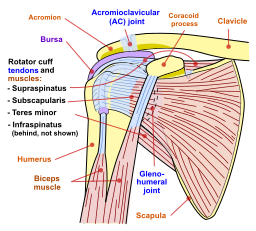
Okay, so no, I wasn’t just looking up shoulder. 😉 But in looking up the origins of the phrase cold shoulder for my recently-finished Edwardian, I found several of the uses interesting, so I thought I’d share.
Shoulder itself has been in English approximately forever. But did you know the word (which comes from German) is likely related to shield? I sure didn’t.
Then there’s the use that means “side of the road”–that’s from 1933. I suppose that makes sense, because until roads were widened for cars, I’d never heard of any shoulder to them…still, it’s a bit later than I would have thought.
And then there’s cold shoulder. This is what sent me to etymonline.com to begin with, and I’m glad I paused to look it up! The phrase dates from 1816, first from Sir Walter Scott. It actually didn’t indicate a human shoulder, but rather a shoulder of mutton–which was considered a poor man’s dish. Make it cold, and it was an unpleasant dish that you would only serve someone you were put out with or decidedly not welcoming to your home. So to give someone “the cold shoulder” meant to give them something distasteful and insulting, to show you have no regard for them.
Not what I expected from that one, gotta say!

by Roseanna White | May 8, 2014 | Thoughtful Thursdays, Uncategorized
I reached a major milestone on Sunday–I finished my book, for the, er… (one…two…three) fourth time. And I’m talking the fourth total, complete, toss out every scene previously written and start from scratch rewrite.
It’s a pretty awesome feeling to finish a book any time. But when it’s a book you first wrote “The End” on at age 13? Yeah–I’m still a little shocked that I’m doing it again, LOL, and so incredibly thrilled that I’m doing it again because that book, the one whose premise I came up with at age 12, is contracted by Bethany House. I can’t think of a much better example of how God leads us on some crazy paths that last a lifetime! (I had a guest post up on the rather amazing journey of this book on Go Teen Writers last week. If you haven’t seen it yet,
Read It Here.)
Making the feeling even better is that I really love the new setting I gave the story, and the new elements and plots that got worked in–or worked back in. In every previous version, Brook (my heroine) was an orphan. The legalities of that were tricky though, for things like inheritance laws, so I decided in this version that her father still needed to be alive.
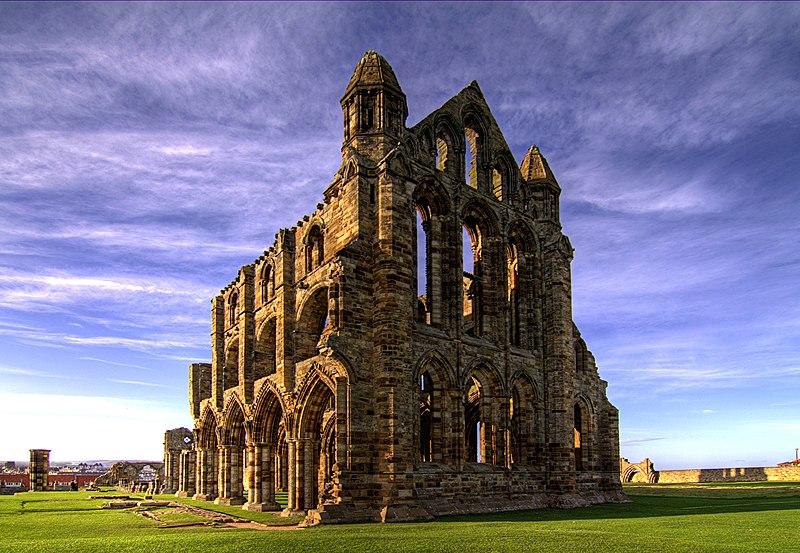 |
Whitby Abbey ruins – close to the new setting of the book
and where a big scene happens
Photo by Chris Kirk |
And oh my goodness. That changed everything–in ways I love! She now reunites with him in the first couple chapters, and their journey added such depth to the story–it just makes me grin to think about it.
In the first two versions, I put a great deal of emphasis on Brook’s maid. That’s something I took out in version 3 and its various revisions for a number of reasons. But I re-introduced the below-stairs point of view in this one, and I was so happy to get to do so. I love that dichotomy too, of the two different perspectives who both get to realize that family is family, no matter the circumstances.
I’m now to the point where I get to let the MS rest for a little while before I dive into edits and trim it down to size (not as much trimming required as usual! LOL). For me, that means editing
A Soft Breath of Wind and a slew of WhiteFire books in the meantime. I’m putting the finishing touches right now on WhiteFire’s historical that comes out next week,
Sweet Mountain Music, and having a blast. The characters in SMM are on the hunt for a certain legendary ape creature said to haunt the Cascades, and it’s a story that will make you laugh and sigh and cheer them on.
In not so happy news, one of the reasons I forgot to blog yesterday is that Rowyn woke up with a sore, swollen knee and spent the first hour of the morning (my blog writing time) on my lap. With no injury to link to this, we took him to the doctor, who suspects it might be juvenile arthritis. We would certainly appreciate prayers about this!
Hope everyone’s enjoying May thus far, and that all you moms have a special weekend planned. =)


_Railway_Poster,_1905.png)


 Roseanna M. White is a bestselling, Christy Award winning author who has long claimed that words are the air she breathes. Having successfully launched two homeschool grads, she now spends her time writing fiction, designing book covers, and pretending her house will clean itself. Roseanna is the author of a slew of historical novels that span several continents and thousands of years, as well as a fantasy series and contemporary mysteries and romances. Spies and war and mayhem always seem to find their way into her books…to offset her real life, which is blessedly ordinary.