by Roseanna White | Apr 11, 2018 | Cover Designs
I have a blast designing book covers for all different genres–and sometimes I’ll have particular fun doing one in a style I’ve never attempted before. But then there’s my comfort zone…and for me, that’s historical covers.
When Meghan Gorecki contacted me about designing the cover for her Civil War novel, I knew this would be a “comfort zone” cover, which made me smile. I’d critiqued the first couple chapters for her already and also knew the synopsis, so I had a bit of a feel for it before going on. That’s always nice. And of course, Meghan had some ideas.
1.) Must have roses. “Somewhere, anywhere,” she said. ?
2.) Must have heroine only
3.) She liked sepia tones, mauve, dark red, browns, maybe a splash of navy
4.) She absolutely adored this cover for Joanne Bischof’s upcoming novel (which I also love, and which my book club will be reading as soon as it comes out!)
Some other elements she mentioned were the script/letter overlay (as letters are an important part of the story), a Pennsylvania farm, maybe a Civil War battlefield…
My first attempt included something else she’d mentioned, but which she decided would, in fact, be a spoiler, so I won’t even mention it or show you that first cover. ? Suffice it to say that though it was a no-go, we both fell in love with the coloring, which gave me direction for what we did eventually go with. Which began with this…
I have no idea where this picture is actually from, but living in a state that borders with Pennsylvania, I can verify that this could be a PA farm. Or WV farm. Or a MD farm. Or any other number of farms in the mid-Atlantic. ? The rolling mountain in the background, the green grass, abundant trees…yep. A perfect background. I did have to do some resizing, though, and actually stretch the grass and sky both, to end up with the needed format…
So then it was time to go in search of a heroine. There aren’t a ton of stock photos that have a genuine hoopskirt dress, but I liked the colors and positions of this girl…
The dress wasn’t wide enough, and the face and hair didn’t fit the description of the heroine, but those can, of course, be changed. Let’s start with the new head. I liked the expression on this girl’s face, and the body position was the same, so that would work.
Putting this head on the first body/dress and widening the skirt, I ended up with this…
Not a bad start! Next, of course, came the roses. I played with a few different options. First I thought maybe I’d do a trellis…
But that ended up obscuring too much of the background, and it was hard to get all the edges to look neat and tidy. So I ended up going with this shot that was in the color scheme I wanted.
Aren’t they pretty? I made them the foreground and ended up with this.
Of course, the coloring of the three different images doesn’t exactly match in this, does it? It looks like a mash-up. Looks “Photoshopped.” Isn’t natural. So I added a filter.
Much better! Isn’t it amazing how a photo filter over the different layers can draw them together? This one is Nashville, part of the Instant Hipster Photoshop Action pack.
So this is our basic image. There are, of course, still a few crucial elements missing, and some tweaking too. For starters, this girl’s hair is too dark, so I did some lightening. This can be a tricky step, actually. Darkening is easier, and making it red is the easiest of all, LOL. But with some detailed changes to the curves, brightness, levels, saturation, and coloring, I ended up with a result Meghan and I were both happy with.
Next came that text overlay, up in the sky. Had I just plopped it in there in a normal fashion, it would have looked like this:
That wouldn’t do, of course. I changed the layer blend mode to Overlay, however, and got this.
As an added bonus, this even brightened the sky, which I loved!
So now the image part is finished. It’s time to turn to the title and series name, etc. First, I added some fade layers so that the words would stand out.
This actually has two different fade layers. A cream one more in the center, where the title would go (currently where my logo is) and a teal layer on the bottom, for behind the author name. So plugging that important text in there…
The normal serif type here is Oldstyle, which has a bit of a typewriter look. I used that for both “Amongst the” and “Meghan M. Gorecki.” We tried out a few different scripts before we found the right one, and we decided on Marcella Script.
The only thing left was the series! The series Title is Keystone Legacy, and I knew she wanted a keystone incorporated into it, so I found one with stylized elements on the side, made it gold, and put the name in there.
So adding that one, we have the final front cover!
And here’s the full cover too.

The War Between the States shakes Margaret Bryant out of her comfortable
upper-class life when her father enlists in the Army of the Potomac.
Despite being safely ensconced above the Mason-Dixon Line in
Chambersburg, Pennsylvania, Margaret finds her strength tested by
opposition from familiar faces and Confederate threats. Will she let a
young man from a lesser station into her heart even as war rages ever
nearer to the homefront?
Restless Connor Doyle sees the war as a
way to escape from his family’s farm and his identity as a poor
Irishman’s son. His brother, Adam, torn between duty to country and his
family, enlists alongside Connor. Adam dares to hope in a future with
Margaret when he begins a courtship correspondence from the war front.
The two brothers make a vow to protect one another at all costs, but
when faced with death and destruction from all sides—will they be able
to uphold it?
The three bloodiest days in America’s history brings
these three together at Gettysburg and tragedy’s cruelty threatens to
tear two hearts apart—and bring two unlikely allies together.
If you follow the link I have on the title above, you’ll see that the Kindle version releases tomorrow and the paperback is already available. ?
I hope you enjoyed the peek into the cover design process on this one! What’s your favorite part of the cover?

by Roseanna White | Apr 9, 2018 | Word of the Week

I looked this one up, wanting to use it in a book set in 1917…only to find a history I knew nothing about!
So mannequin has been around since 1902, but it wasn’t a form used to display clothes. Or rather, not a non-living one. When mannequin first appeared, it was the term used for a fashion model! So those well-formed young ladies who modelled clothes were the mannequins, not the dress-forms used in display windows. That meaning didn’t come along until 1939!
That said, the word did sometimes mean “artificial man” before 1902, apparently especially in the translation of Hugo. This because it’s directly from French.
Interesting to note that we also have the word manikin, from the Dutch for “little man,” which was specifically a jointed figure used by artists. So the little 4-inch tall artist’s model I got my daughter for Christmas is a manikin. The meanings have blended over the years, but they were once two distinct things from two different languages. Who knew?

by Roseanna White | Apr 5, 2018 | Thoughtful Thursdays
In my church’s Wednesday night Bible study, we’ve been reading through Romans, taking it just a few verses at a time and really digging deep, beneath the easy and accepted answers to try to grasp the subtleties of what Paul is saying. Most recently, we’ve been in chapter 7, where Paul is talking about how we battle with sin.
Using the present tense, he talks about his own struggles to do the right thing and not do the wrong thing. This isn’t just the battle or the sin from before the Damascus Road experience–this is now. I think all too often people use this as an excuse. “Look, even Paul still struggled with sin, so surely it’s not surprising that I do!”
But it’s important to ask what sins he’s talking about. Is he still struggling with persecuting Christians? I don’t think so. With legalism? Paul’s letters certainly never indicated that this is something he deals with–in fact, we see him in Acts calling out others on it.
So should we be still struggling with our Big Sins from before we accepted Christ? Or rather, should we be okay with still struggling with those, just accepting it as part of humanity? That has never sat right with me.
And on Good Friday last week, the sermon brought this up again in my thoughts. We had a guest speaker, a retired pastor who is a regular attendee at our church. As he spoke about the work of the Cross and how the crucified Christ worked His salvation miracle for all our sins, he touched again on how those sins change over the years.
How the closer we grow to our perfect God, the more imperfections we can see in ourselves. We’re not struggling with the same old sins, repeating them over and again. We’re becoming ever mindful of new levels we need to reach.
Much as I hate cleaning, this is a perfect analogy. I could use any number of examples–property after a tornado, a house after a flood, a child’s messy room, a table on which you’ve been kneading dough. The same principles apply to all.
When you begin cleaning, you start with the Big Stuff. The trees and branches; the debris and destroyed furniture; the entire toy box worth of contents on the floor; the mounds of flour and bits of crusty dough.

In being cleansed from sin, these are the obvious things. The murder and adultery and idolatry. This is where God is saying, “Yeah, we’ll worry later about whether you pray in every moment you should. Right now, let’s just make sure you’re not still frequenting the prostitutes at the temple in Corinth, okay?” I’m not saying clearing this is
easy. It’s not. It’s hard work, and if you’ve been mired in these big, noticeable sins for a long time, breaking free of them is
work. Manual labor style, exhausting work. But there’s no question of whether you need to do it after you come to Christ, so you buckle down and get to it.
But once the big stuff is cleared out, after you take a breather, thinking, “Wow, I did good work! I cleaned up a lot of my life! Let me just take a peek at what I’ve done…” you go back and look. And do you know what you see?
All the twigs still scattered around your property. The mud on your floor. The bits of paper and trash in your kid’s room. The oval of flour on the table that just won’t brush off.
Maybe in your spiritual life, this is the loving your neighbor and loving God first. Still important things, right? Your yard or house or room or table sure don’t look clean with them there. Similarly, your spiritual life is obviously not right if you say you’ve accepted Christ but can’t spare a kind word for anyone around. So you set to work on those too.

And once you finish this round, it might look pretty good, right? If you don’t look too closely, it’s neat and tidy.
But we’re not finished. There are still leaves in the yard. The room needs scrubbed. The floor needs to be vacuumed. The table wiped down, maybe even sprayed with something. And it doesn’t end there, either. Because the wind will blow again, footprints will be tracked in, new toys dropped, fingerprints or new food will land on that clean table.
Cleaning up our souls is a process too–a never-ending one. Because as we continue to live and encounter new situations, new clutter or dirt lands on us, right? It’s not that we should be continually working on those first things–it’s that the cleaner we get, the more nit-picky we get. Those tiny flaws that weren’t even visible under the big problems–the nooks and crannies of our spirits–need our attention once the bigger stuff is cleared away.
But I love that our God is so big and yet so detail-oriented. The God of the cyclone is also the God of the whisper. The Lord who forgives us for the Big Sins also pours out His mercy on those nooks and crannies.
Because He wants us to be Holy, as He is holy.
He doesn’t want us to be content with clean enough. He wants our souls and spirits and hearts to be pure. Pristine. Like His.
Are we too content to stop after the first or second round, or let new clutter undo the work we’ve done before? What crannies inside us need His attention today?

by Roseanna White | Apr 4, 2018 | 20th Century, Remember When Wednesdays
As I dive into working on the first book in The Codebreakers, my story world advances a couple years, to 1917. And as I build my Pinterest board, I end up looking at a lot of fashion. So naturally, you get to take a tour with me through WWI styles. =)
As always, the military styles of the day impacted not only men’s fashion, but women’s. This, for instance, is the first introduction of the trench coat, and it had begun to edge its way into even ladies’ suits.
 |
| © Victoria and Albert Museum, London. |
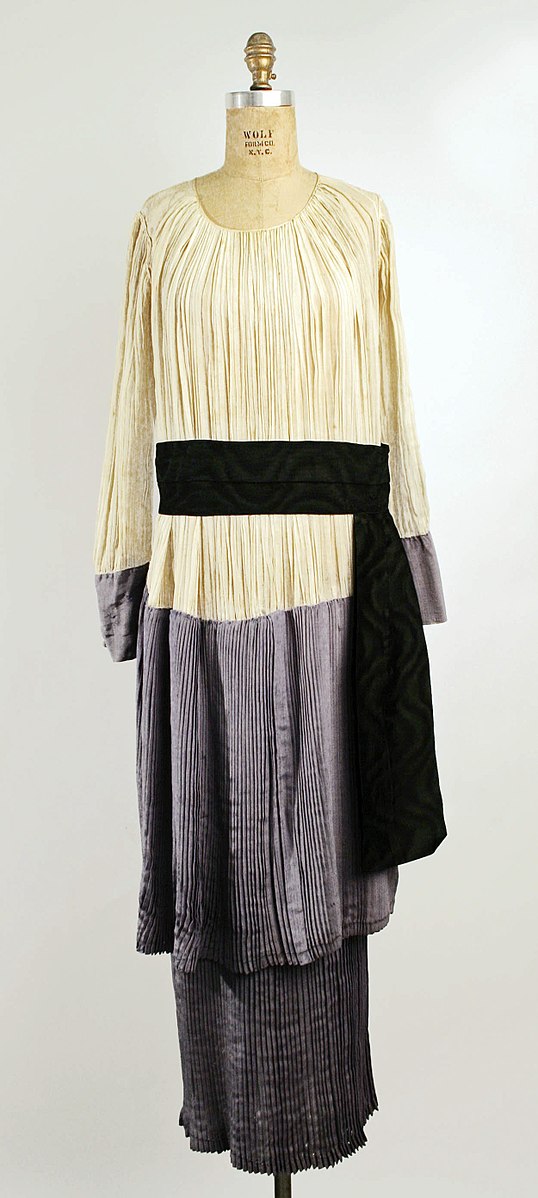
But of course, war isn’t only about new cuts and belts and lengths of jackets. The hard reality of war is that it results in shortages–and this is what ultimately led to higher hems and less extravagant styles in the late 1910s. Over the course of a few years, dresses went from this…
…to this…
Note that the overall profiles became more slender, with skirts that are less full and shorter. It was in the late teens that floor-length really started becoming a thing of the past. Even much evening wear became ankle length or above.
 |
| Pre-war, 1911 |
|
 |
| During the war, 1916 |
Hats underwent a pretty drastic change too. Where once they were huge and the-more-ostentatious-the-better…
 |
| © Victoria and Albert Museum, London. |
…to a generally smaller and more conservative silhouette.
 |
| © Victoria and Albert Museum, London. |
And then there was the hair! While the majority of women were still wearing their hair long, the Marcel wave was frequently used on the sides before the length was pinned up… and in many fashion plates and photos of celebrities of the day, we also see a growing number of bobbed, waved styles.
My heroine in this first book is Margot, little sister of Lukas from
A Song Unheard, and I posted on Facebook last week asking whether people thought she should get her hair cut. The result–people feel very strongly about hair! LOL. I had some very enthusiastic yeses, and some very horrified nos. 😉
I won’t tell you what I’ve decided. I’ll just say that it’s very in keeping with the character, and that I learned quite a bit about
Margot as I debated the question. And I
will tell you that the question comes up in the story because Brook from
The Lost Heiress makes an appearance, and you KNOW she was the first lady of fashion in England to bob her hair! (And probably make an appearance in trousers at the same time…)
So what do you think of the changing styles of the late Teens? Do you like the new silhouettes on the dresses and jackets? The new hem length? What about the bobbed hair?

by Roseanna White | Mar 29, 2018 | Holidays, Sales
As my family busily celebrates Holy Week and Resurrection Day, I’m going to be taking a couple days off blogging. That will only affect today and Monday, and you’ll see me back here on Wednesday with a Remember When.
I hope you all enjoy your Resurrection Day activities with your families and churches! I’d love to hear about how you celebrate, if you haven’t shared yet on one of my other posts this week.
A Stray Drop of Blood will be on sale in my shop starting tomorrow. This book takes place around the death and resurrection of Jesus. You can snag your SIGNED copy HERE.
Don’t forget to submit your entries for the Hair Contest by Saturday night! You can find more information HERE.
PLOT TWIST!!!
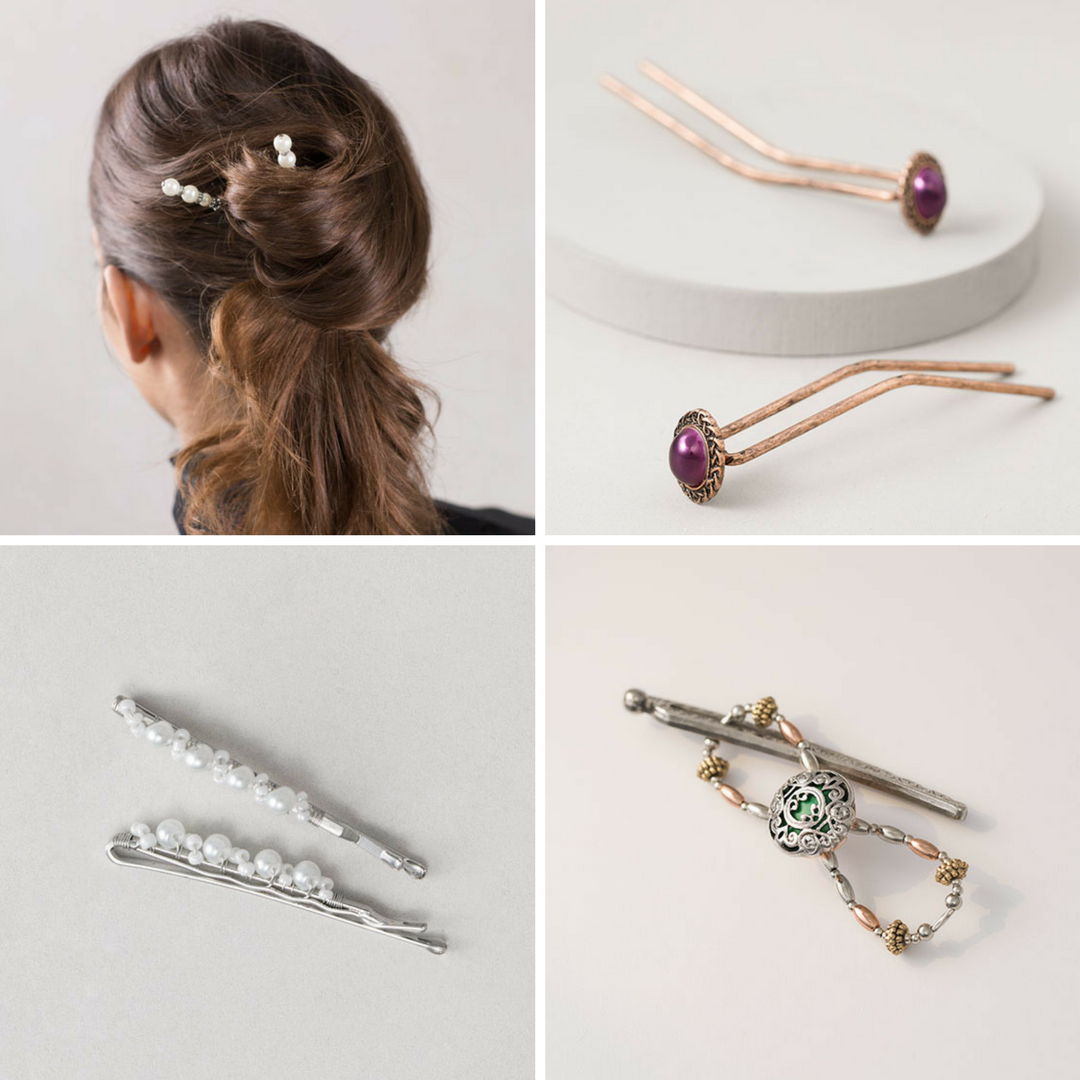
I am also super excited to let you know that there has been an addition to the prizes for the hair contest!!!! A $20 credit to Lilla Rose! A HUGE “Thank You!” to Myra for the donation! You can see a few of their products pictured below…Pretty appropriate for the contest I think! You can follow Myra’s Newsletter HERE. And join her group on Facebook HERE.
And don’t forget about the rest of the amazing prizes!!!





 Roseanna M. White is a bestselling, Christy Award winning author who has long claimed that words are the air she breathes. Having successfully launched two homeschool grads, she now spends her time writing fiction, designing book covers, and pretending her house will clean itself. Roseanna is the author of a slew of historical novels that span several continents and thousands of years, as well as a fantasy series and contemporary mysteries and romances. Spies and war and mayhem always seem to find their way into her books…to offset her real life, which is blessedly ordinary.