by Roseanna White | Apr 16, 2015 | Uncategorized

Hello, and welcome to Stop #17 of the Purple Team’s loop of the Christian Fiction Scavenger Hunt!
Not sure what I’m talking about? Learn all about the hunt here: http://lisatawnbergren.com/2015/04/the-christian-fiction-spring-scavenger-hunt-basics/
If you haven’t already, be sure to check out the other stops, beginning HERE, gather the clues at each stop, and be entered to win some fantastic prizes. A full list of stops can be found at the link above, and the other team (Pink) begins Here.
The Hunt begins at NOON Mountain time on April 16 and ends at midnight Mountain on April 19, 2015, so you have a long weekend to complete all 32 stops and maximize your chances at prizes!
The prizes are numerous and awesome! Lots of free books, Kindles, and more! There are 2 loops, so you can try for either or both, and if you complete both, you can be entered for the grand prize! Check out the prizes!
Many of the authors are hosting bonus giveaways–including me! Find the Rafflecopter giveaway below for a copy of A Soft Breath of Wind, winner’s choice of format (signed paperback or digital)!
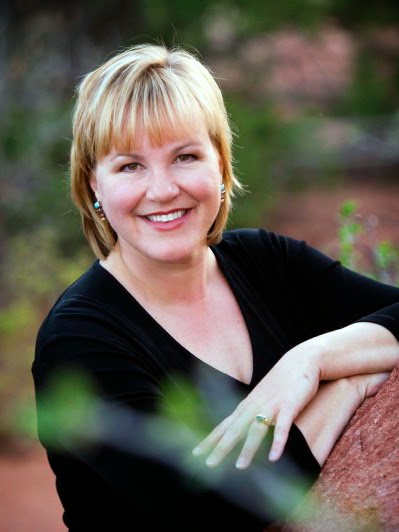
Lisa T. Bergren has certainly written a lot of books—nearly
fifty!!—and her latest is a dystopian series called Remnants (SEASON OF WONDER
and SEASON OF FIRE). Think, “Hunger Games
with hope.” Her goal is to make every reader think about the gifts they’ve been
given and how those might be best utilized to change our world. Sounds good to
me!
With this newly published dystopian/romance/spiritual
suspense series, on top of her best-selling God Gave Us…picture book series
(which just showed up on the Wall Street Journal
bestseller list between Clive Cussler and Dr. Seuss!), she’s getting more
attention…and more inquiries from aspiring writers. So she decided to share
this, below…
HOW TO GET PUBLISHED
By Lisa T. Bergren
I love hearing from readers after they read my books—when you read my books, we sorta become friends. Lots of aspiring writers contact me. About reviewing their manuscripts (which I can’t). About publishing advice. About having coffee together, “if I have the time”… And I get it. After twenty-plus years in the biz, I’ve finally hit that place where I seem like I’ve ARRIVED. Like I have THE ANSWERS for writers.
And the good news? I have some of them.
But the bad news? I don’t have them all. (Do we EVER??)
Twenty-five years ago, when I was first starting out, or even twenty years ago, when I had a few books under my belt, I looked to those ahead of me and wondered why they had it “so easy.” Why they seemed to publish stuff that I could never get away with publishing…What they knew. How they had possibly MADE IT when I couldn’t quite seem to get there. Now that I’m a consistently working, mid-list writer, “making it,” I thought I’d share what I’ve learned so far.
1) Read. Read like crazy. Read a ton of the books that most closely resemble what you’d like to write.
2) Outline your favorite book you’ve read in the last year in the genre that you’d like to write in. Figure out what the author did right, chapter by chapter, by dissecting what happened with both the plot and characterization. Write notes on the pages. Underline. Star sections. Take special note of nuances that make it a stand-out: Fabbo dialogue? Incredible romantic tension? Fascinating, unique plot? Locale or description? Details? What WAS it that made that book SING? Summarize, chapter by chapter.
3) Now do the same with another book in the same genre. Maybe one that was a bestseller, if the one you chose above, was a closet-favorite, but never really seemed to sell. What do you think the differences are?
4) Read WRITER’S DIGEST. Go to the Library and read back issues. They usually have a fiction column every month (and other writing pathways too). It’s how I learned the basics for $15 a year.
5) Establish a basic web site, along with a Facebook, Twitter and Instagram account and begin building your author platform, posting anything you’re willing to share about your life, your writing, and the genre you love to read/write. Don’t just market—strive to establish good social media relationships with real dialogue and sharing.
6) Go to a writer’s conference. Faculty should predominately be published authors or publishing professionals who are making a tangible “go” at this business (Google most to make sure), and relate to the publishing market you hope to get into. Attend your first conference with an open mind, ready to learn all you can, putting little pressure on yourself. Don’t go in thinking THIS IS IT. Go in thinking I’M FACT-FINDING. Find out where you are in the process, whether you’re just beginning to learn (which is fine!) or ready to submit to editors and agents or somewhere in between. Which isn’t to say you shouldn’t have SOMETHING ready Year One to talk about (a proposal/pitch). Just consider your Year One pitch your “straw man,” so you’re not crushed if an editor or agent doesn’t bite. Be brave enough to say, “You didn’t seem all that excited about what I said about my book/wrote. Can you tell me why?” Note: For most people, publishing is a long-term process.
7) Return to the conference the following year. I promise you’ll feel way more comfortable and confident both years you attend if you just press into the learning curve then return to be more assertive on the pitch-front; you’ll gain PLENTY from both experiences to make it worthwhile.
8) Follow up with any contacts. Keep writing. Start a new book if you’re done with the last. Maybe it’s book #2 or book #10 that is your winner.
9) Research self-publishing. But don’t leap into that unless you have no other option and you’re fully convinced it’s the way you should go. It’s its own investment. (And its own post-full of information.)
10) Keep writing. And reading. Outline a new book that’s your current favorite. See how it inspires you to improve your own writing.
11) Join a critique group. Now, I don’t recommend this lightly, since I’ve never taken part in the same. But I’ve heard good things about some and bad things about others. The only critique group I’d ever invest in would have to have similarly-dedicated writers, ready to give me constructive criticism with the goal to help me get published, not compete with me. That’s a pretty special group. If you can find it, go with it. If you can’t, don’t sweat it. Hallmarks of a good group would incorporate people who are (a) investing in writers’ conferences and resources; (b) making discernible writing progress; (c) getting better at the craft; (d) giving you feedback that both encourages and challenges you to improve. Anything else? Meh. Just carry on solo. You’re better off writing a hundred new pages and rewriting and rewriting, than spending time with a fruitless group. Don’t be afraid to cut ties with a sinking dock so you can sail away, even with a patched-together sail.
Go, Writer, go. There is ALWAYS room for a fresh, new voice. Tell the story on your heart. Write it and don’t stop. If I can do it, so can you. I’m not overly smart or savvy. I’m not overly dedicated. I just kept at it, until I had a manuscript together. And then I edited, and edited, and once upon a time, I got the chance to give it to someone with publishing power, and my fairy tale came true.
Yours might too.

Lisa Tawn Bergren is the bestselling author of nearly fifty books in all genres—from children’s picture books to teen fiction to women’s nonfiction—and can’t quite believe she’s been so blessed to see them all get into print. Still, she sees her job as work, and tries her best to just get the next thousand words down, day by day, until the next manuscript comes together. She lives with her husband, Tim, a duck maker (RMrustic.com), her three teen children, and a little, white, fluffy dog named Talisker Beatrice, in Colorado Springs. For more info, find her at LisaBergren.com, Facebook.com/LisaTawnBergren and @LisaTBergren.
You can find Lisa’s books on Amazon, Barnes and Noble, CBD, or at your local bookstore.
THE SCAVENGER HUNT SKINNY:
Thanks for stopping by on the hunt! Before you go, make sure you WRITE DOWN THESE CLUES:
Secret Word(s): ~ Jim Rohn
Secret Number: 16, because that’s my kids’ ages added together
Got ‘em down?? Great! Your next stop is #18, Lisa T. Bergren’s site.
a Rafflecopter giveaway

by Roseanna White | Apr 15, 2015 | 17th-19th Centuries, 20th Century, Remember When Wednesdays
Oh. My. Gracious.
So. As I was debating what servant POV I was going to use in the third installment of my Ladies of the Manor Series, I decided it would be fun to have it be the lady’s maid of the villain rather than the heroine. Though of course, she couldn’t just be any lady’s maid. Each of my servants’ POVs in the other two books propelled the story forward pretty spectacularly, so this one had to have a big purpose too.
So naturally, I decided she must be a Russian spy. Because, you know…of course. 😉 No seriously, it fits perfectly. My villains have made some pretty huge promises to “the Russian,” but they haven’t been able to deliver on said promises. Mr. The Russian might be getting a wee bit impatient, nyet? So obviously, he’s going to be looking into this.
Enter Miss Russian Spy. =D
Her name is Kira Belova, and in my mind’s eye she looks like this.
 |
| Elizaveta Boyarskaya, Russian actress who would be a perfect Kira |
I wasn’t really sure of her story, or how to write her, so I emailed my friend who has studied Russian history for years to ask for some guidance. She pointed me to a HUGE, hefty, meaty, enthralling book called Natasha’s Dance by Orlando Figes. I read for hours over the weekend, starting out going through the book chronologically and then jumping around a bit to the different sections so I could get closer to the time period I needed.
And Kira’s story started to crystallize.
Kira comes from a family of Russian peasant stock who were, until serfdom was abolished in the 1860s in Russia, serfs. Not just any serfs though–artist serfs. What are they, you might ask? I don’t know that I’d ever heard of this practice, or if I had, I’d forgotten. But Mr. Figes wrote a lot about them, all of it so very interesting.
The noble, wealthy families in Russia from the late 1700s through the mid 1800s controlled a lot. All the land, all the people who lived on the land. They had such a huge work force that it sometimes resulted in comical things like a horn band in which, rather than teach anyone to play their horn well, they simply taught scores of them to play one note well…and then to know where in the song to play their one note. (???? LOL)
The leading families created orchestras…operas…theaters…ballets…. They had architects…artists…and often harems from among the serfs. They would select a few of their serfs and send them to academies and Imperial schools in the capital, and then those artists would work for their masters. They could achieve great fame, but only rarely did their masters let them work for anyone else or accept commissions that could earn them fortune as well. It was considered fashionable and Western (it was very desirable to be Western in Russia in that era) to have a slew of serf girls devoted to your personal, intimate pleasure. Masters could treat these girls any way they desired–and when the girls got too old to please them, they’d usually marry them off to their best male serfs and give them a dowry.
As I read about these artist serfs over the weekend, I began to get a feel for Kira’s family’s story. I decided that her babushka (grandmother) was an artist serf, who ended up wed to her master’s huntsman (the elite of the male serfs)…but only after being one of his Girls. She was a singer or actress (haven’t decided which) but also–as most Russians were–a woman of great faith. (One famous Russian writer observed that Russians, as a whole, had to have great faith in order to survive life in Russia.) She raised her family to value above all the freedom they were granted. To do what they ought. To understand, as Russian peasants are famous for understanding, the realities of life and death.
 |
| Posters for the Ballet Russe, 1911 |
Kira would have broken her babushka’s heart when she ran off to Paris and joined the Ballet Russe–or rather, when she embraced the life of a ballerina in the Ballet Russe, which involved having a “patron” who supported her in high style…for, of course, the cost of being his mistress. The life Babushka had hated, had so valued getting away from, and Kira chose it freely.
But Kira’s going to get her redemption story, and it’s going to be a lot of fun to write. Because through her uniquely Russian understanding of life, she’s going to bring healing to some broken places in the world of her new English mistress. She, who has an intrinsic understanding of life and death (some of Tolstoy’s final words were musings about how the peasants die), will have wisdom to offer, though she never anticipated taking on such a role. She, though a spy, will help knit together families long feuding.
Yep. So. Much. Fun. The learning, the writing, the creating. Let’s pray I can adequately capture that Russian soul that so many artists and writers made it their life’s work to shape and bring to light–a Russian soul in many ways created by those artists struggling to understand their history and cultural identity.

by Roseanna White | Apr 13, 2015 | Word of the Week
Since I wrote on the origins of hello last time, my daughter said that I had to look up hi for this week. =) So here we go! Far simpler than hello, LOL.
Hi is most assuredly an Americanism, a greeting whose first recorded reference is from 1862. Interestingly, it’s recorded in the speech of a Kansas Indian.
But before becoming a standard greeting, it was used as a way of attracting attention–such uses have been recorded as early as the 15th century. It was probably a variant of Middle English’s hy, hey. The extended form hiya is from the 1940s.
Coming This Week
We have some fun coming on the blog this week, so I thought I’d clue you in! On Wednesday, I’ll be sharing some of the oh-so-interesting history I’ve been learning about Russia in preparation for my Russian spy character, Kira Belova. So. Much. Fun.
But then on Thursday, beginning at noon mountain time, I’ll be participating in the Christian Fiction Scavenger Hunt, which will visit 34 authors for a chance at some AWESOME prizes. (The blog will be live before the hunt begins as we all update links and make sure all information is where is should be.) In addition to the huge grand prizes, most of the authors are also offering prizes of their own–including me, who will be offering a signed copy of A Soft Breath of Wind. You really don’t want to miss this, and will have a long weekend to put all the clues together!

by Roseanna White | Apr 6, 2015 | Uncategorized
It’s not that I’m not blogging just because we’re taking some days off school this week . . . I’m not blogging because all my blogging time this weekend (when I usually prepare the week’s blogs) was spent at church, the nursing home ministering, and at my family’s big egg hunt, LOL.
But hey, it’s a good time to refresh and regroup and bask in the world of sunshine and greening grass! So a couple quick notes:
1.) I’m in the ACFW Foundation’s silent auction, which ends today, 4/6/15. At this point there’s only one bid on the book cover design I donated, so someone is likely to get a great deal on it! If you’re looking for a cover design and would like to help out ACFW’s scholarship fund, take a look at the silent auction!
My Listing: http://bit.ly/1BRqCUo
Whole Auction: http://www.32auctions.com/acfw2015
2.) My determination to replace “Easter” with “Resurrection Day” is off to a good start, though it’s going to take a few years to break a habit so long ingrained!
3.) It’s starting to look like spring out there!!!!!!!! Go out and enjoy it! 😉



 Roseanna M. White is a bestselling, Christy Award winning author who has long claimed that words are the air she breathes. Having successfully launched two homeschool grads, she now spends her time writing fiction, designing book covers, and pretending her house will clean itself. Roseanna is the author of a slew of historical novels that span several continents and thousands of years, as well as a fantasy series and contemporary mysteries and romances. Spies and war and mayhem always seem to find their way into her books…to offset her real life, which is blessedly ordinary.