
by Roseanna White | Oct 24, 2011 | Word of the Week
I’ve studied Ancient Greek. As in, took 2 years of the language, in addition to reading a slew of the texts. So things Ancient Greek I like–and tend to use. And assume I know pretty well. 😉
And so, I’ve never hesitated to use the word “kudos” in a historical manuscript because, well, I know it’s directly from the Greek. I know it’s old.
But apparently the English didn’t pick up on this fun word until 1799. Sigh. 😉
Kudos, taken directly from Greek (if altered slightly because of a non-meshing of the alphabets), means “fame, renown.” Though it may sound plural to an English speaker with that -s ending, it is in fact singular.
When kudos first entered our language, it was in academic circles only–among those who would have read the Greek, go figure. =) But by the 1920s, journalists had picked up on it and began to use it in articles, which entered it into the mainstream.
And to give kudos where it’s due, I’d love to direct everyone to the
Colonial Quill Anniversary Celebration today! We’re especially celebrating the releases of two members’ books this month, but also the founding of our oh-so-delightful Colonial group blog. Please stop by and join in our e-party. =)
Oh! And though I’m
not sharing this for the kudos (tee hee hee), I just learned that
Love Finds You in Annapolis, Maryland is RT Book Reviews’ Top Pick for Inspirationals for December! So exciting!!
by Roseanna White | Oct 17, 2011 | Word of the Week
Yesterday in the car, I looked out at the bright blue sky and had a Mr. Roger’s moment–I started singing “It’s a Beautiful Day in the Neighborhood” and my daughter asked, “Why’s is called a neighborhood? Does it have anything to do with the hood of a coat?”
I’d never paused to ponder this -hood suffix, but naturally her question made me curious, so I came home and looked it up. =)
Prior to the 14th century, instead of hood we had hade, which was a free-standing word that meant “person, individual, character, individuality; condition, state, nature; sex, race, family, tribe.” Wow, right? Quite a list. Round about the 1300s hade made the change to hood and narrowed in meaning to “condition, position,” though its literal meaning has ties to brightness and quality.
So, in fact, it has absolutely nothing to do with the now-freestanding hood of a coat, which is from an entirely different root word that means, simply, “covering.” Which is a shame, because Xoe and I had come up with a nice little reason for the word to be used in such totally different ways. 😉
by Roseanna White | Oct 10, 2011 | Word of the Week
It’s always baffling when I think to look up a word that I take for granted and realize that it’s a relatively new addition to the English language. I had this experience with the words fiancee/fiance a couple years ago, when I first began writing Love Finds You in Annapolis, Maryland. My characters are engaged at the beginning. The year is 1783.
But she isn’t his fiancee. Nope, that word didn’t come into use until 1853. And interestingly, the male version “fiance” didn’t follow until 1864. An eleven year gap between calling the woman a fiancee and the man a fiance! Interesting, isn’t it?
This seems like an incredibly late addition to me . . . at least when I consider how many stories I have that take place prior to 1864. 😉 It took me a good long while to figure out how to get around that one in a way that sounds natural.
But no fear–we still have options. “Intended” and “betrothed” are legit. So in
Annapolis, for instance, Lark fights with her intended in the first chapter. And later in the book Emerson chases after his betrothed. (Not that those are gender specific, mind you.)
Yet another example of how learning something was at first a pain . . . but you know, it actually helped me create the voice I needed for the time period, so I’m glad to I thought to look it up. =) It’s the little things that make a voice. 😉
by Roseanna White | Oct 3, 2011 | Word of the Week
It’s that time of year again. The leaves are turning colors, the weather is turning cooler, and the pumpkin vines are taking over my yard. Okay it’s the first year we’ve planted pumpkins, so this is a first–and a lesson to us on where NOT to plant them next year! LOL.
So it seems like a fine time to talk about the roots of the words we associate with the season. =)
For a good while, British folk referred to this time of year solely as “harvest.” It wasn’t until the 16th century that the word “autumn” entered the vernacular. Taken from Old French and, in turn, Latin, there are also suggestions that it shares a root with August, and that the aug- implies severity.
Over the centuries, most “autumn” words have come to carry a meaning of “end, end of summer” or “harvest.” And unlike all the other seasons, we not only have several words for it, we also have several different start/stop dates in English speaking countries. In Britain, for example, autumn begins in August, while in America it’s September.
And of course, from “autumn” we get one of my all-time favorite words: autumnal (pronounced aw-TUHM-nl), which my best friend still swears I made up. 😉 As you can assume, it means “things pertaining to autumn.”
And then, of course, we have “fall.” Now used only in the U.S. as a synonym for the season, “fall” is short for “fall of the leaf,” and dates from the 1540s. So it’s nearly as old as “autumn,” but has for some reason fallen out of use (ha . . . ha . . . ha . . .) in other English-speaking parts of the word.
So here’s wishing everyone a beautiful, colorful fall filled with all the delightful, autumnal things that make you smile. =)
(For reference, the picture is my kids and nieces at our family farm’s Octoberfest, from last year. From left to right you see Isabelle (niece), Paisley (niece), Xoe (my oldest), and Rowyn (son in need of a haircut last year, LOL).)
by Roseanna White | Sep 26, 2011 | Word of the Week
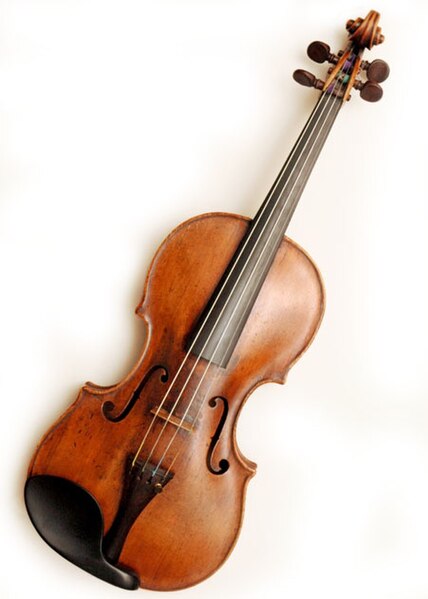
Everyone knows what a fiddle is, right? Or what it means
to fiddle. It’s a violin. More, it’s a colloquial use (that usually denotes the rural or country or south) at this point. Why? The word has been used since the late 14th century, it’s perfectly legitimate. Why the connotation? (Let’s keep in mind that I LOVE what has become termed “fiddling.” I like the more formal
Violin too, but the fiddle is so much fun!)
Interestingly, it’s been relegated to such use largely because of the other words containing “fiddle” that mean “nonsense.” Funny, huh? We’ve got fiddle-faddle used since 1610 for “nonsense.” Fiddlesticks has meant the same since 1620. Fiddlededee combines the nonsensical with contempt, and has since 1784. From what I can tell, there’s no particular reason why “fiddle” got used in all these words, but it’s certainly had an effect on the root word. Fiddle now has associations with nonsense.
Maybe that’s why I like it so well. 😉
Forgive me if this post isn’t quite coherent–we spent 12 hours in the car yesterday coming home from St. Louis. The conference was great, fun, etc. Appointments went well, classes were great, but the absolute best part was getting to talk to all my friends face to face!
I’m guessing it may take a few days to recover though, LOL.

by Roseanna White | Sep 19, 2011 | Word of the Week
How do you describe a pearl? It doesn’t shine like other gems. Doesn’t shimmer, has no fire. It gleams, yes. But it’s the rainbow of color that really sets it apart. That . . . you know, the pearlized effect. 😉 Its iridescence.
I can never think of a more accurate word for it, so I was a little frustrated when I looked up “iridescent” and realized it entered English just a wee bit too late for my 1780 book. As in, 16 years later, in 1796. After grumbling for a minute over not being able to justify using it (I’m nit-picky about my word choices like that), I put it aside to wonder about the word.
“Iridescent” comes from the word “iris.” Now, we all know “iris,” right? The colored part of our eyes. A flower. Yep. But apparently “iris” means rainbow in Greek–hence why the colored part of our eyes are called that. The Greeks would also use it to describe any colored circle, like the round “eyes” on a peacock feather. Pretty neat, huh?
So it makes perfect sense that we would have created a word like “iridescent” to describe that rainbow effect. If only we had created it two decades earlier . . . 😉
(Photo credited to Georg Oleschinski/Inst. f. Paläont., Uni Bonn via Wikipedia Commons)



 Roseanna M. White is a bestselling, Christy Award winning author who has long claimed that words are the air she breathes. Having successfully launched two homeschool grads, she now spends her time writing fiction, designing book covers, and pretending her house will clean itself. Roseanna is the author of a slew of historical novels that span several continents and thousands of years, as well as a fantasy series and contemporary mysteries and romances. Spies and war and mayhem always seem to find their way into her books…to offset her real life, which is blessedly ordinary.