
by Roseanna White | Sep 24, 2018 | Word of the Week
I know, I know. This seems like a strange choice of word for me to look up. ? But I had a moment last week when I was wondering how long the garden-hose type of thing had been in use, so I looked it up. As I do. And then was kind of amazed by the answer!
Hose first meant “a covering for the legs.” As early as the 13th century, hose were a common article of clothing, especially for men. They could be woven or of leather, have feet or not. We know them today as tights or leggings, but those hose of old would have been much thicker than the nylons some women still wear (though I usually eschew them, LOL).
In the Middle Ages, the word began to be applied to other things that resembled a stocking, like a sheath or a husk of a grain. So where did the garden-hose sense of things come in? And why?
The etymology site doesn’t explain the “why” clearly, but it did mention that one of the roots of the word–the Dutch hoos–not only meant “leg covering” but “waterspout.” I wonder if this dual meaning had something to do with the additional meaning the word gained in English.
Regardless a “flexible rubber tube used to convey liquid” has been around since the mid 1300s! I had no idea it was that old. Hence why I had to share. ?

by Roseanna White | Sep 20, 2018 | Thoughtful Thursdays
In a move strange to fiction-loving me, much of my recent reading (or listening, as the case may be) has been of non-fiction. I’ve already written about my thoughts on the importance of having heroes in our lives, inspired by The Closing of the American Mind by Allen Bloom. I’ve also been listening to a really amazing book about living a creative life, Big Magic. (Warning on that one–it has some language. But if you can overlook the occasional F-bomb, it also has some really interesting and unique views on our creativity.)
But in both of these books, my dander was raised by nearly throw-away lines that demonstrated how each author fundamentally misunderstands the core of Christianity. Without quoting either Bloom or Gilbert directly, both made the assertion that the reason Christianity was flawed and even dangerous is the fixation on suffering. Both seemed to imply that Christians desire suffering–that we all have a martyr complex, thinking that by suffering we earn our reward.
I’m a bit baffled by this. First, is this really what most people think about our faith? That we just
love to be miserable? And if it is…WHY? Where are the throw-away lines about the Christian
Joy? The Christian PEACE? The Christian LOVE?
My friends, if we’re known for our suffering instead of those things, then we are doing something wrong.
Because yes, suffering is a part of Christianity. But we are not–or should not be–taught that our own suffering is necessary in order to achieve salvation. We are–or should be–taught that when we suffer, which is inevitable, Jesus will be there with us. That through His suffering, ours has already been paid. Because he willingly took that for us.
The beauty of Christian suffering is that we can rise above it, through Him. That we can sit in a prison in chains and sing for
Joy. That we can lose everything the world says should matter and rejoice in all He’s given. That we know where true value lies and that nothing the world throws at us can strip us of that ultimate gift.
The misconception seems to be that we seek pain, trials, hardship, and agony because we think that without it, there is no Joy. I wonder who these authors knew that believed this. I’m sure there were people. I certainly know of fictional ones who fell into this trap. One of L.M. Montgomery’s neighbor characters (whose name I’m drawing a blank on). Dorothea from Middlemarch. I’m sure there are plenty of others, and I’m sure they’re based on reality.
But I so want to talk to these two authors I’ve been reading and say, “Oh, man. Look. Suffering is at the heart of Christianity, yes–because suffering is inevitable in life. But we don’t seek it. He already did, so that we don’t have to. We seek Him, and what we find is that those dark parts of life aren’t so dark anymore.”
And I am so, so sad that this is what thinkers, people who actually give the subject thought, not assumption, come away with. I’m sad because that means that the Christians they know have shown them this untruth. That we’re preaching pain instead of
Joy without actions. That we’re showing loss instead of gain. That the world thinks we’re dangerous, not because we oppose the evil they might love, but because we’re coming off as self-destructive.
Yes, Christ calls us to suffer for Him. As in, when we suffer–which we will–make sure it’s for a good cause and not a bad one. If we’re going to be accused, be accused of being a Christian, not a criminal. If we’re going to be persecuted, let it be because we’ve gone toe-to-toe with evil, not because we’re filled with hatred. Suffering is assumed for all–we’re just supposed to make ours count and have
Joy in the face of it.
I pray that if any of these thinkers come in contact with me, their throw-away lines in their next best-selling books won’t be about how people of faith have a martyr complex. It’ll be how people of faith sure do exemplify what it means to seek the good with a
Joy that goes beyond logic.
Let’s show the world that we’re not about clinging to pain. We’re about walking in love.

by Roseanna White | Sep 17, 2018 | Word of the Week
This one is yet again at the request of my kids, who asked why in the world we abbreviate “dollar” with $. (They also asked why they sometimes have one line through it and other times two.)
So…though it has been suggested by some historians that the $ is related to the 8, for the Spanish pieces of eight that were frequently used as currency in Ye Olde Days, the more accepted history is that it’s in fact from the peso, which we also used before the Revolution. Peso was abbreviated with a capital P and then a superscript S. In handwriting, people began to write the two letters overtop each other. And so it evolved as in the diagram below.
By why do some dollar signs have two lines? The theory is that it used to be to differentiate the US dollar. Given that $ was already in use by then, the two lines are thought to have once formed a U. Also in the diagram below.
These began to appear in handwriting in the 1770s and in print in the early 1800s.
So where did the word dollar itself come from? It’s from Flemish daler, which is short for Joachmistaler, which was a coin mined from the silver in Joachimstal, Bohemia. Daler was borrowed as a term for coins used in both Spanish and British colonies in the Americas during the Revolution and became the official US currency in the late 1700s.

by Roseanna White | Aug 30, 2018 | Thoughtful Thursdays
But in listening to a book called The Closing of the American Mind and hearing the acclaimed Mr. Bloom discuss American’ aversion to heroes and how he’d observed that it has impacted our culture as a whole, I realized that all my thoughts on literary heroes and my sorrow when I see statues of Southern heroes being torn down are really about this greater question.
Why do we need heroes? Not just in literature, but in life? And why don’t we have them anymore?
The book in question looks specifically at university students and how they’d changed over the course of this professor’s thirty years of teaching them. The book, though written in the 80s, certainly pinpointed the patterns that continued and which we’re still seeing play out today. I don’t agree with his every conclusion, of course, but there’s no denying the general trends he puts to paper.
The root of them all is the current American mindset that we must accept all viewpoints, all cultures, all beliefs as valid, and that the only things that aren’t valid are the ones that oppose that openness. Which of course is ironic, because no other culture believes the same, and so while we say we grant the validity of another culture, we don’t really, because they’re too “closed.” It’s a cycle that renders the starting point absurd and yet is fully embraced by Americans…which results in a shallow belief system founded on nothing.

Enter the idea of a hero. We
had American heroes, in generations past. Washington and Jefferson. Adams and Hamilton. Lee and Grant. Even though we knew they were imperfect human beings, we still honored them for what they’d done in and for our country. At one point, hero worship of these founders and generals was so complete that it began to worry some educators, and they decided they better start reminding kids that Washington was still human. “He had wooden teeth!” they began to teach. A reminder that he had his weaknesses, his humanness. But it wasn’t yet meant to strip him of his title of “hero.” Merely to remind us that heroes are human.
As the years went on, the teaching continued on this trend. “Let’s teach our kids about their heroism” became “Let’s teach them how our heroes are human” became “Let’s teach them about their faults and flaws” became “They can’t be forgiven for their faults and flaws” became “These men weren’t heroes, they were monsters, and we’ve founded a country on them! GASP!”
The logical conclusion is to tear down the country built upon such monstrosity. And that is exactly what we see happening today, especially in the educational arena.
But that won’t just damage us as a nation. It will damage us as individuals. Because we need heroes.
We need people to believe in.
We need people to aspire to be like.
We need examples to follow.
We need causes to fight for.
We need causes worth dying for.
We need to believe there’s something bigger than ourselves.
This is human nature. And when we don’t fill those needs one way, we just fill them another. Anti-heroes become the people we believe in. We aspire to be like the rich since they don’t ever pretend to be great on a human level. We follow our instincts. We fight for universal acceptance, never ourselves accepting that it’s oxymoronic. We die
only for our own pleasures. And the only thing we’re willing to grant is bigger than ourselves is our need to tell others they’re the same as us.
Here’s the thing–we have this idea today that heroes have to be perfect. Or that we have to agree with them 100%. That if we dare to honor someone for something and then we discover a fault, we’ve committed a grave sin and are endorsing the fault.
That’s simply not true.
We do not have to be on the same side as a soldier to grant that he fought heroically. We do not have to agree with someone’s cause to admire them for sacrificing themselves to save others fighting for it. Heroes don’t have to be on the winning side.
This struck me a week or so ago when my dad had me looking up the memorials at Gettysburg. Thousands of men were lost on both sides of the war during that bloody battle. And memorials to men from both sides were raised after the war. Memorials that show how bravely they fought. That remember their names.
I’d never paused to realize that there were memorials for both North and South on that battlefield. But of course, there were. Because there were men who fought and died on both sides. There were acts of heroism on both sides. And in this case, it wasn’t just the winners that told the story–and even the winners recognized that the cost was hardly worth the win. This was a story owned by both sides of the divide–a story that belongs to our nation, whether you live in the north or the south.
Activists today are making a concerted effort to destroy the memory of American heroes with whom they don’t 100% agree. What they don’t seem to realize is that by doing so, they’re destroying themselves. Because if they teach the next generation that anything “closed-minded” is evil, what happens when that next generation realizes that their very teachers were closed-minded about something? They’ve rendered themselves null.
I believe there are heroes. In the past, and among us today. I believe there is Truth. I believe there is Right. And I believe a person can be a hero even when they’re wrong. I believe being human, having faults, doesn’t negate what they do right. And I believe honoring them for their victories can teach us all something, even when we disagree with some of their stances.
If we don’t believe in
something we’re left fighting for
nothing. And that is sure to ring empty in the ears of those who follow.

by Roseanna White | Aug 22, 2018 | Companion Guides, Remember When Wednesdays, The Great War
Well, that time of year has come again. My family has officially started the 2018-19 school year. Part of me hates the loss of free time…and part of me is excited about all those awesome books we get to read together this year!
For those of you who have been reading the Shadows Over England series, you know that one of the most important things for the family of thieves-turned-agents is that with the advent of steady income they can, for the first time, afford to send the little ones to school. While “public schools” had long been available in England, they weren’t what we think of them as today. They weren’t free for the public–they were just available for anyone from the public to pay to attend. Free, compulsory schools were set up in the 1890s, at which attendance was required…until the age of 10. My family, however, didn’t send the little ones to those for a few very good reasons–they weren’t a legal family, and if the children were known by the system, they’d be taken away. So Barclay educated the children at home until such a time as he could pay to put them in a better school.
In An Hour Unspent, we get a glimpse of the kids finally taking on the roles of traditional children. They’re attending school, fighting over books, struggling with Algebra. All things familiar to children today. But for them, this was huge. This was an opportunity. This was a new life unfolding before them.
But the war changed the school system just as it changed everything in England. Many of the teachers were gone, having enlisted. Meals, which had only been served in schools for 8 years at that point in history and were far from inspiring, became sparse and even less inspiring as shortages took effect. Older children often left school as soon as they legally could, usually between 10 and 12 years old, to get a job and help their families survive.
In some ways, the war hit colleges hardest. In my research, I found several mentions of professors leaving colleges when they closed in 1914–presumably because of lack of students. But then those same professors returned to their colleges in the later years of the war–presumably when more students came in.
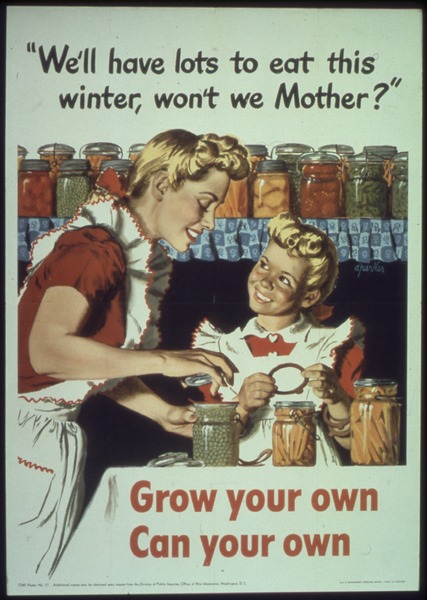
As the war dragged on and shortages increased, the need for food was on everyone’s mind. “Grow your own” became a necessity, and many schools created gardens and instructed their students in how to grow vegetables. Schoolchildren were also called upon to knit scarves and socks for servicemen, write letters to soldiers, and raise funds for the war, often by selling small flags and pins to be worn on special Flag Days.
Though hard days for everyone, the First World War did, in fact, lead to educational reform in England. In 1918 the school leaving age was raised to 14, with more options available for children 14 to 18, to train them for better paying, skilled labor. This was one of the huge things that led to the stop of child labor. Which meant it was opposed by factory owners, landowners, and even the Church. But it also paved the way for what we know today–mandatory education for children up to 18 years of age (which came into effect after WW2 in England).
Did you enjoy school or dread it? Would you have left school to get a job as a young teen had it been an option?



 Roseanna M. White is a bestselling, Christy Award winning author who has long claimed that words are the air she breathes. Having successfully launched two homeschool grads, she now spends her time writing fiction, designing book covers, and pretending her house will clean itself. Roseanna is the author of a slew of historical novels that span several continents and thousands of years, as well as a fantasy series and contemporary mysteries and romances. Spies and war and mayhem always seem to find their way into her books…to offset her real life, which is blessedly ordinary.