_-_Worcester_Art_Museum_-_IMG_7700.JPG/800px-Christ_Healing_the_Sick,_1813,_by_Washington_Allston_(1779-1843)_-_Worcester_Art_Museum_-_IMG_7700.JPG)
by Roseanna White | Oct 15, 2012 | Word of the Week
|
| Christ Healing the Sick by Washington Allston, 1813 |
Oh yeah, going for controversy this week. 😉
So here’s the deal. I’ve heard from quite a few sources that we moderns are misusing the word nauseous. That it ought not mean “to feel sick or queasy” but that it rather means “to cause a feeling of nausea.”
Now, I’ve heard this from sources I trust, but they never quote their sources, and I’m now on a quest to figure out why in the world this is touted as grammatical fact and, more, as a “modern mistake” when every dictionary I look it up in says that nauseous has carried both means (“to feel sick” and “to make sick”) since 1600-1610.
One dictionary I found says “careful writers will use nauseated for the feeling of queasiness and reserve nauseous for “sickening to contemplate.” I’m okay with being careful, really I am, but I’m still unsure why grammarians are saying that using its original meaning is “a mistake of the moderns.” It is, in fact, the first definition of the word in the OED.
So. Calling all grammarians! 😉 If you learned it this way and could point me to a source (not just an expert like the wonderful Grammar Girl, mind you) that states this as fact (maybe CMS has settled the question at some point??), I would be very grateful. I don’t mind changing my ways to be a “careful” writer–but I’m a Johnnie. I don’t ever accept an expert’s opinion without checking out their sources. 😉

by Roseanna White | Oct 11, 2012 | Thoughtful Thursdays, Uncategorized
You know how some people never set goals for December because it’s so busy with Christmas stuff? That’s how my October has become. First weekend is Octoberfest at my family’s farm, second weekend is our awesome family reunion, third weekend is my girl-o’s birthday, and the last weekend is always some form of trick-or-treating. And of course, prep for all these things during the week.
 |
| Punkin’ Chunkin’ at Higsons Farm Octoberfest |
I always know better than to plan anything else on the weekends in this lovely, pumpkin-scented month. But somehow I always manage to fill up the weeks. This year we started Xoe in the Girl Scouts’ Science Discovery Club, we committed to two different Bible studies, and Xoe always goes from ballet one night a week to two in preparation for The Nutcracker this December.
And did I mention I’m trying to finish up a book?
Seems like a lot, but seriously, this is how every October turns out. I distinctly recall last year, we were painting our new/old church’s basement (which naturally fell in October…) and I was ready to pull out my hair. Home school was wearing me down, the book I was trying to write wouldn’t come out right, and I was just feeling overwhelmed and incompetent.
 |
| Rowyn and my dad giving hayrides at Octoberfest |
This year I’m hanging in there pretty well. I get stressed day-to-day when busyness interferes with my daily goals, but I’ve squeezed it all in somehow. Not saying I deserve a big golden “S” on my chest or anything (I tried to tell Rowyn the other day I was SuperMom, and he looked at me with that “get real” look and said, “No you’re not. You do not have superpowers, Mom.” LOL. Reality check from a 4-year-old!), but I’m feeling more grounded. I’m taking time each day for my devotionals, I’m in a prayer group that helps me keep my focus where it belongs.
 |
| My girl Xoe (left) and my nieces at Octoberfest |
And I’m having fun. I think that’s a big key. All these many activities going on are all ones I’m excited to take part in. My kids had a blast at Science Discovery, the Bible studies are great groups, and Xoe’s birthday party is going to be a costume party, and she’s super-excited to have a lot of friends coming this year.
And my book is going great, praise be to the Lord. Yes, at this point I’m panicking that I won’t be able to keep it in the right word count, but there’s always trimming. =)
So no startling insights today, but after a sick-day with the boy-o yesterday, and a morning of errands awaiting this morning (must get the ingredients to make my famous Pumpkin Gobs with orange-cream cheese filling!), busyness is on my brain…
What’s your Busy Time? Christmas? Summer? Some random month where everyone in your family decided to be born or get married? 😉 How do you cope with it?

by Roseanna White | Oct 10, 2012 | 17th-19th Centuries, Remember When Wednesdays
As the weather gets cool and wet and oh-so-autumnal around here, it’s always fun to escape to the tropics–even if only for a few minutes, and even if only for research. 😉
Last week I realized with some surprise that my hero had to sail to Bermuda to get a count of the British fleet amassing there, so I had to scrabble to get some handy-dandy research. (Shucks.) See, Bermuda became a very strategic port for the British during the War of 1812. Its position off the coast of the U.S. made it a perfect rallying spot for the fleet coming from Europe, and it’s where Vice Admiral Cochrane kept his flagship and headquarters through much of the war.
I imagine it was a terrible thing, commanding all your troops from Bermuda, especially in the winter months. Eh? 😉
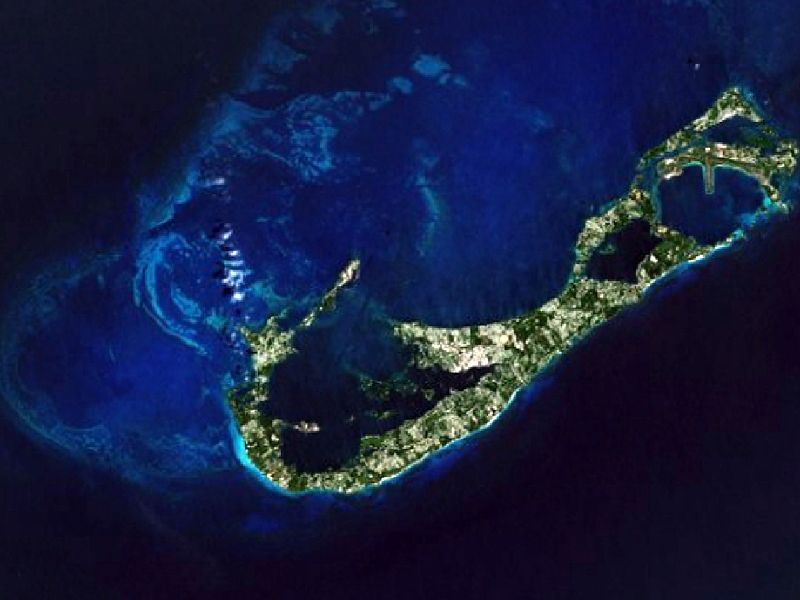 |
| Bermuda from space |
Now, my primary research book talked a lot about who arrived in Bermuda when, with how many ships that had how many guns, who was on what transport, who argued with whom…but it left out a little detail like, oh, the name of the port. So some quick internet research came to the rescue, and I discovered that the British fleet had anchored in Bailey’s Bay.
On the hill above the bay was Mount Wyndham, a picturesque home that became the Admiralty House during the war.
And in the turquoise waters, if you squint just right, you can imagine my hero’s ship, Masquerade, at anchor in the bay, a goodly distance from Cochrane’s flagship, Tonnant (which means “thundering).
And now my little boy-o, who isn’t feeling very well today, needs some attention, so I’ll just leave you here in the warm, sultry sunshine of Bermuda…

by Roseanna White | Oct 8, 2012 | Word of the Week
|
| Lesbia Weeping over a Sparrow by Sir Lawrence Alma-Tadema, 1866 |
Depression. Which is what I would be in right now after the failure of my primary coffee pot if I did not have a French press to serve as backup . . . 😉
Naw, seriously, this is another word I had to look up for my work-in-progress. See, I’ve learned to be careful about any word or phrase that is used in modern psychology, because many of them are either plain ol’ new or with new meaning since Freud and company came along, but so much in today’s common vernacular that we often don’t even pause to consider them… So I thought depression had better be investigated.
Apparently the first appearance of the word was in the 14th century, as a term in astronomy. I admit I had to look this one up, because I couldn’t fathom, on this Monday morning with belated coffee, why in the universe astronomy would employ this word. Until I saw the phrase “the sun at an angle of depression…” Ah. Angles. Right. Moving on.
Pretty much all connotations of depression stem from the literal “pressing down” of something, though that above sense pre-dates the literal meaning by 300 years. Go figure! For that matter, even the most familiar “dejection” is from the 15th century, so pre-dates the literal.
Of course, do keep in mind that when older texts (or historical fiction, LOL) refer to someone experiencing depression, this is merely a description of low spirits, not a clinical term. The clinical term didn’t come about until 1905.
But we also have a few more meanings that come from those in-between years. In 1826, depression was applied to “a reduction in economic activity.” And then in 1881 the meteorological meaning joined the team in reference to barometric pressure. Talk about a word with meanings in every sphere! The celestial one, the atmospheric one, through our wallets and all the way to our spirits.
Interesting indeed!
Hope everyone has a lovely October week full of no depression other than the atmospheric and celestial types. 😉

by Roseanna White | Oct 4, 2012 | Thoughtful Thursdays, Uncategorized
|
| Degas’s The Millinery Shop – don’t ask me what this has to do with my topic today, LOL. I guess hats are a blessing? |
Yesterday as I emailed my best friend, I shared with her a little sermon I’ve been preaching to myself all week. The subject? Blessings–and how we’re not entitled to them. Naturally, I figure if it’s been occupying my thoughts, I must therefore share it with everyone today, LOL.
noun
1. the act or words of a person who blesses.
2. a special favor, mercy, or benefit: the blessings of liberty.
3. a favor or gift bestowed by God, thereby bringing happiness.
4. the invoking of God’s favor upon a person: The son was denied his father’s blessing.
5. praise; devotion; worship, especially grace said before a meal: The children took turns reciting the blessing.
In my mind, do you know what this makes a blessing? A gift. One given to the person being blessed at no charge, freely. One that ought to be received with grace and gratitude. Certainly when we receive blessings from the Lord, we thank Him for them (or should, right?) and praise Him for His loving kindness and faithfulness.
And when we receive a blessing from another person, we often tell them so, tell them what their gift means to us.
But how often are we like the Israelites in the wilderness? How often do we receive that manna, those blessings, day after day and begin to forget that they’re gifts? That we need to be thankful? That instead of whining for more, we ought to be shouting anew every day, “Wow, amazing! Thank you!”
We get desensitized to the good just as we do to the bad. We start to take long-standing blessings for granted. We go from being amazed by them to expecting them. Then to demanding them. And then to thinking we’re entitled to them, that we deserve them, that, if they stop for a time, we are being neglected or ill-treated or punished.
But we’re not. Seriously, stop and think about it. Were we being punished before those blessings started to flow? No. So if they stop, are we punished then? No. We are simply returning to the status quo. It’s only our perspective that has changed.
Which always reminds me of this part in 1984 where the government has to cut the chocolate ration by, like, two ounces a day or something. (Rationing chocolate! YIKES!) They know the people are going to be upset, so do you remember what they do? First they announce that the ration will be cut by six ounces (okay, I forget the numbers, but you get the idea). The people protest. So they graciously raise it again by four ounces–resulting in the two they needed to cut. And the people rejoice, because they feel like they won back something they had lost, rather than realizing they still came up short.
We do this sort of thing all the time, and in both directions. We can be so far ahead of where we were a short time earlier, but if there’s anything at all we deem negative, backward, then we think we’ve fallen, even if we’re still levels above where we used to be.
But you know what? I think sometimes we need to “lose” something, so that we remember it wasn’t ours to begin with. That it was a gift. That it was a blessing, not an entitlement. We need to remember that sometimes when something is withheld, it isn’t an attack on us. That is isn’t a punishment. That, often, it has nothing to do with us at all. We’re just the hand outheld, waiting for our ration.
A free ration–so who are we to complain if it isn’t delivered one day?
Because when it comes down to it, what am I really entitled to in this world? What do I deserve? What do I have a right to get angry about if it’s withheld? If we’re to trust the framers of the Constitution, it’s pretty basic. Life. Check. Liberty. Check. The pursuit of happiness.
Catch that one? We have the right to the pursuit. Not to the result. That, my friends, often has to be earned. And if it’s given without our earning it…well then, that’s the gift. That’s the free bonus. That’s what ought to make us raise our hands to heaven and shout our thanksgiving.
There are so many things I’m thankful for. And in a normal day, so many things that frustrate me. But this week, I’m working hard to keep them all in perspective. Because God is so, so good to me. I deserve nothing and He gives me everything. I deserve pain and He gives me healing. I deserve to be cast out from Him and He pulls me close.
I’m not entitled to His love or to His blessing. But He gives it. And so do His children. And when they can’t…well then, maybe that’s when I ought to be trying to bless them instead.

_-_Worcester_Art_Museum_-_IMG_7700.JPG/800px-Christ_Healing_the_Sick,_1813,_by_Washington_Allston_(1779-1843)_-_Worcester_Art_Museum_-_IMG_7700.JPG)




 Roseanna M. White is a bestselling, Christy Award winning author who has long claimed that words are the air she breathes. Having successfully launched two homeschool grads, she now spends her time writing fiction, designing book covers, and pretending her house will clean itself. Roseanna is the author of a slew of historical novels that span several continents and thousands of years, as well as a fantasy series and contemporary mysteries and romances. Spies and war and mayhem always seem to find their way into her books…to offset her real life, which is blessedly ordinary.