
by Roseanna White | Oct 31, 2013 | Remember When Wednesdays, Thoughtful Thursdays, Uncategorized
 |
| An approaching storm front we captured in the Outer Banks this summer |
When you get bad news…or sad news…what do you do? It’s inevitable that we run into these times–they’re part of life, much as we wish they weren’t.
We’re going to have those days when we cry.
We’re going to have those days when we yell.
We’re going to have those days when we feel like the best course is to hide from the world.
Ever since I was a middle-schooler, I’ve pondered my own reactions to these times. I remember when we got the news that my grandfather had cancer. My parents cried. My sister cried. There was much hugging. There was much talk.
I closed myself into my room with a pencil and a notebook, and I wrote poem called, “Why Do I Smile?” I happen to have it on my computer, surprisingly, LOL, so I’ll copy it:
The days melt together in a turmoil of ache.
Their only distinction is a separate pain.
I feel that my future’s not mine to make.
So why do my dreams suspend–unslain?
Each person has their own losses;
Each deals with them in their own way.
Most cry as they carry their crosses.
Why do I smile and laugh it away?
My world has diminished to shatters,
But my eyes are as dry as the breeze.
As hope lies around me in tatters,
I sing as I fall to my knees.
Why can’t I mourn as my mother,
Or weep it away as my friend?
Why must I resort to another—
Stronger?—more miserable end?
I can’t see into tomorrow
So I don’t know that I’ll make it that mile.
Even I can’t see past my own sorrow.
So tell me, why do I smile?
Thirteen-year-old me didn’t really have the answer. Thirty-one-year-old me doesn’t either, but it hasn’t changed. I still, upon getting upsetting news, am more likely to smile and assure everyone I’m okay than cry and let them assure me it will be okay. And it’s not a facade–that’s my genuine, gut reaction. The eternal optimist. The faith, perhaps, holding me up.
But it always hits a month or two later. Every single time I’ve gotten a rejection on a project I thought was sold, for instance (which has happened way too many times, LOL), I’ve experienced this. I can smile and assure my critique partners it’s no big thing. I know that God’s got something better for me. That it was no surprise to Him. I know it, and so I can smile.
Until I can’t anymore. When it hits, it hits like a waterfall, tumbling over me without relent. Those are the days when I mourn for what was lost, or for what I know will be lost soon. I grieve for what cannot be. I look at the projects or dreams or loved ones snatched from me, and I ache. I whimper. I want to cry, but by then I can’t seem to find any tears. (This is why Roseanna cries maybe twice a year. Usually over something stupid like forgetting to pay a bill, LOL.)
It’s so hard not to be discouraged in those times. And in the throes of discouragement, what you know doesn’t often help, because you’re too overwhelmed by what you feel. If only the two could line up!
As you might guess, I’m having a delayed reaction this week, LOL. Nothing as terrible as the impending loss of my grandfather, just a bunch of disappointments adding up, and the old ones that I thought settled coming to add their voices to the mix. One of those days, one of those weeks.
And so I ponder. Again. I wonder why I deal with things the way I do. Is it the right way? The wrong way? The strong way, the weak way? I don’t know. But it’s my way. It’s my way to smile until it hits, to smile again as soon as I can. It’s my way to mourn quietly.
This time, I’m sharing the feeling if not all the reasons, not in a bid for sympathy, but in a laying-bare, to see if it helps in the healing. In a question of how you manage these days, these weeks, so I can listen for the whisper of the great Healer in the voices of my friends.
So please, share. What do you do when the tempest strikes?

by Roseanna White | Oct 30, 2013 | Ancient World, Remember When Wednesdays
Yes, this is posting way late. Because I kinda forgot it was Wednesday. Because I was kinda caught up in writing A Soft Breath of Wind. Which I kinda can’t apologize for. 😉 But here, belated, are some random historical thoughts, LOL.
|
| Fresco of a Roman merchant boat |
We historical writers always run into some of the same problems, no matter what era we’re writing in. One of mine is “How long did it take to get from point A to point B?” By boat. Or horse. Or on foot. Or, eventually, by train. Where were the roads? The ports? Did they have docks? How did they get from boat to shore? How far would they have been from town?
These are the kinds of logistical questions that can drive me absolutely batty, because the answers can be hard to find.
Sometimes though, they come from the strangest places–like my daughter’s school books, for instance.
A couple weeks ago, we were reading through the assigned pages of The Awesome Book of Bible Facts, the pages about Roman travel. Xoe was not so interested–I, however, found it fascinating. Diagrams of their roads–details about their sea travel–time it took to sail from Jerusalem to Rome–BE STILL, MY HEART!
LOL.
Yes, we must take our information where we can find it, check it where we can, and run with it.
I’m running right now. Because, finally, Samuel and Benjamin and company are aboard one of Titus’s vessels, on their way from the port at Joppa to Ostia, the port near Rome. One month, give or take, it shall take them, and then they’re home.
I’ll get to write my reunion scene. Which also happens to be a pretty big explosion, my mid-point pivot. Of course, in the meantime I have a couple hearts to crush and character hopes to dash to set them up for this, so do excuse me. Much to do. 😉
by Roseanna White | Oct 28, 2013 | Word of the Week
This classifies as another word that I knew was new, but didn’t know was that new.
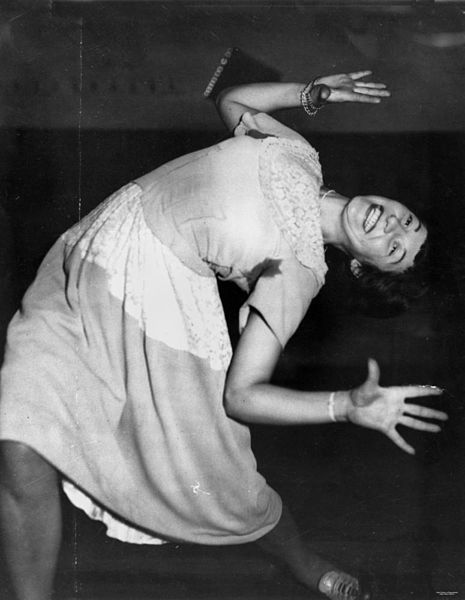
Jitters entered English round about 1925–and it’s not entirely clear where it came from. The best guess is that it’s a variation of chitter, which had been a dialectical word for “tremble, shiver,” since Middle English.
|
| The jitterbug, 1947 |
It took it another 6 years for the ‘s’ to get dropped and the noun to become a verb–to jitter. And another 7 for the jitterbug dance to join the scene. Still, that’s a lot of evolution for just over a decade!
And as cold as it is here this morning, there could easily be some jittering going on. 😉

by Roseanna White | Oct 24, 2013 | Thoughtful Thursdays, Uncategorized
 |
| Psalm 136 |
My daily reading has me in the Psalms right now, and I have always loved this book of ancient songs. I know, I know–I’m not exactly unique in that, LOL.
But do you know what I love most about them? That the songs speak to everything we experience. Joy, heartache, love, disappointment, hope, longing, fear, appreciation, pain, expectation, shame, victory…you name it. If there’s an emotion out there, one of the psalmists has written about it. It’s almost impossible not to find a psalm that expresses one’s heart at a given moment. A psalm that cries out your heart to the Lord.
That itself isn’t what I love though. It’s that through every one of those emotions, underscoring it and crowning it, is praise.
Through the Joy, the authors give all the praise to Him.
Through the pain, the authors wait with praise for Him.
I’ve read through the Psalms several times, and I’ve only ever found one song that only laments and doesn’t tack on praise. One–out of 150!
Some days it’s really easy to praise. Like yesterday, when my precious little girl turned 8, and we got to celebrate the day she joined our lives and made them oh-so-much fuller.
I can’t imagine, now, what life would be like without my Xoë. She’s a ray of sunshine, sensitive and sweet and smart and sassy, and I thank the Lord daily (literally) for her and her brother.
But we all know praise isn’t always easy. Some days, the world comes crashing in. Some days, all hope seems lighter than vapor. Some days, we just want to rant, rail, and cry out. To God, to man, to the universe–to whoever will listen…or because it seems no one will.
Sometimes we know how David felt, being hunted and sheltering in caves. Sometimes we feel like our son, our pride and Joy, has turned on us. Sometimes we feel haunted by our sin. Sometimes we feel forgotten.
But my eyes are upon You, O God the Lord;
In You I take refuge;
Do not leave my soul destitute.
I can’t pray trouble will never befall us–it will. We’re going to face disappointments. Persecution. Betrayal. Sickness. Pain. We’re going to lose loved ones. We’re going to stare darkness in the face and not be quite sure where–if–the light lies beyond it.
But I can pray that we have the hearts of the psalmists through it all. That no matter the trial, we keep our eyes on the One who can bring us through it. That no matter the tribulation, we remember that He is our refuge. And that no matter how low, how bad, how tear-drenched our day might be, He will never, never leave our soul destitute.
Today, I praise You, Lord, for all the joys bubbling up in my life. And today, Lord, I praise You for seeing me through the valleys too.

by Roseanna White | Oct 23, 2013 | 17th-19th Centuries, Remember When Wednesdays
Who should be responsible for the poor? For the needy? Whose job is it to feed the hungry and clothe the naked?
And if one takes that responsibility…how should one go about it?
To the Quakers of Colonial Philadelphia, the answer to both was simple: this was a task that ought to fall to them, not to the government, and they were not going to feed mouths without feeding souls. More often than not, they felt, people arrived at low circumstances because of their own choices–often bad ones, morally speaking. And so, they needed to be taught. They needed to bettered.
 |
| A Quaker almshouse |
Quakers ruled the merchant class of Pennsylvania, and they had come up with an idea on how to at once raise the impoverished of Philadelphia from the murk and put them on a path of hope. The Bettering House was run by these merchants, with the goal to improve them in both body and spirit. Families moved into the House, where they were separated by gender. Once there, they received food, clothes, sermons, and gainful employment in the form of spinning, weaving, and dyeing cloth.
Up until this time, the city had been responsible for the poor, but their efforts were small–they provided a bit of food, what firewood they could. The Bettering House took this burden off the city’s shoulders.
But by the mid-1760s, unemployment was on the rise, and the weaknesses of the Bettering House became glaring. Families were separated, the work was hard, the pay was little, and the residents often resented getting “preached to.”
In 1775, a new idea formed, not by Quakers, but by well-educated but monetarily bereft men who shared a passion for bettering the plight of working men in general. With the ultimate goal of earning the common laborer a voice and a vote, James Cannon helped found a rival to the Bettering House–the United Company of Philadelphia for Promoting American Manufacturers…also known as the American Manufactory.
The Manufactory employed a radical new method–since British imports had been banned and the need for domestic-made cloth was on the rise, they saw a new way to provide fair, steady income to families without taking them from their homes and each other. Women could now work from home under the Manufactory’s authority, spinning and weaving at their own levels, and then delivering the cloth to the Manufactory for dyeing. The overhead for the company was low, so profits were high for all involved in the process. Families remained intact.
Though the Bettering House had a fine and noble goal, it’s no great surprise that its numbers started tapering off while the American Manufactory boomed. I love the idea of bettering the soul while tending the physical needs, but perhaps the elite misunderstood what those souls really needed–the love of their families, and the assurance that their voice was heard.



 Roseanna M. White is a bestselling, Christy Award winning author who has long claimed that words are the air she breathes. Having successfully launched two homeschool grads, she now spends her time writing fiction, designing book covers, and pretending her house will clean itself. Roseanna is the author of a slew of historical novels that span several continents and thousands of years, as well as a fantasy series and contemporary mysteries and romances. Spies and war and mayhem always seem to find their way into her books…to offset her real life, which is blessedly ordinary.