
by Roseanna White | Mar 5, 2014 | Uncategorized
I can’t quite believe it, but we’re less than a month from the release of Circle of Spies! How exciting is that?? I really love this book, and while I’m sad to see the series come to an end, I’m really excited to welcome Marietta and Slade into the world.
On Monday, I just saw the first editorial review, which is pretty exciting (since it’s good, LOL). RT Book Reviews gave it a 4 1/2 Star TOP PICK! rating, saying:
White’s Culper Ring historical spy series keeps getting better. This
installment’s intricate plot, terrific twists and heart-stopping
intrigue, as well as the heroine’s deeply moving journey of faith, grace,
and redemption, create a memorable book to be devoured and cherished.
AND the book trailer just went live!
Yes, I’m hoping to whet your appetite. 😉 So to keep that going, I’m sharing the first chapter!
(Click on link to view the PDF)
A Glimpse Was All She Had…
A Glimpse Was All She Needed
1865—Marietta Hughes never wanted to be a spy, but the
family legacy of espionage is thrust upon her as the War Between the States
rolls on. Unknown to her, the Knights of the Golden Circle—a Confederate secret
society bent on destroying the Union her brother died for—has been meeting in a
hidden lair beneath her home. Faced with the secrets of her late husband and his
brother, who she thought she could trust with anything, Marietta’s world tilts
out of control. Can she right it by accepting the call of the Culpers and
protecting a Union agent infiltrating the KGC?
Slade Osborne, an undercover Pinkerton agent, is determined
to do whatever is necessary to help end the conflict between the North and the
South and restore his reputation. When he infiltrates this secret cell, it isn’t
just their inner workings that baffle him—it’s the beautiful woman who seems to
be a puppet for the new leader and yet…so much more.
Do they dare trust each other in this circle of intrigue?
Will their shared faith sustain them? And can Mari and Slade stymie the enemy
long enough to see their beloved country reunited?

by Roseanna White | Mar 3, 2014 | Word of the Week
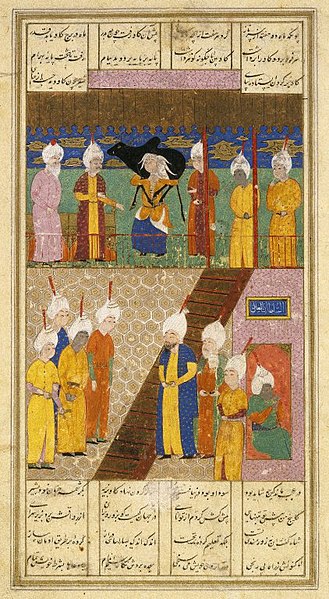 |
Practice Makes Perfect
from a “Haft Paikar” of Nizamic. 1530 |
I’m surprised I haven’t thought to look up the history of this word before, given that I come from a family of perfectionists. 😉 I personally display such tendencies with some of my work, but not all…certainly not my housework, LOL.
But it’s a pretty interesting word!
Perfectionist has been around since the 1650s, but it had only a moral connotation. It was very much a theological stance, proclaiming that one believed that moral perfection is attainable in this life. So this isn’t something that anyone would use for anything other than this theological question. It was rather one that would be applied to certain preachers or theologians.
So this is really another one for the trivialization file. In the 1930s–so very recently!–it took on the meaning we know of one satisfied only by the highest standards. And that’s when perfectionism came around too.
And for anyone looking forward to Circle of Spies, you’re going to want to make sure you stop by on Wednesday–I’ll be posting the first chapter!!

by Roseanna White | Feb 27, 2014 | Thoughtful Thursdays, Uncategorized
Yesterday a friend of mine emailed. She’s as editor but has recently been trying to find representation for a children’s book, with the goal of publication. Now, I know very little about writing kids books, so I haven’t been a whole lot of help. But in her email last night, she said something I know well: “I’m so frustrated! How do you writers do it?”
My answer: “With much frustration. Over many years.”
I’ve been working to get my books published for half my life now. Half. Over half, technically, by a little. I sent out my first queries when I was 15 years old. And though I didn’t keep querying constantly for the next 10 years until I sold something, I did go back to trying that at least once a year. Especially after I got married.
There was one time when I’d just finished a manuscript, and my husband of about a year said, “Now no more writing until you try to get this one published.” High on the feeling of being finished and convinced the story was brilliant, I said, “No problem!”
Problem. LOL. I’m a writer. Not someone who likes to write, someone who has to write. And within a week, I had this other brilliant idea that I couldn’t not work on. I would sneak into our den to write, LOL. For the first day or two, when David walked in, I’d flip to the internet, all like, “What, me? No, I’m not writing…”
That obviously didn’t last long, and we had a good laugh about it. I could appreciate that he wanted to push me outside my comfort zone, away from “being a writer” and into “trying to be a published writer.” That was important. It mattered to me. But not as much–never as much–as just writing. Having him beside me, reminding me to try again, and again, and again to get my books into the world has been invaluable. No doubt otherwise, I’d just have the collection of books in my computer and nowhere else.
But it’s always been about the writing.
Also last night, I took my daughter to ballet, and the grandmother of one of her friends asked, “Are you working on a book right now?”
I had the pleasure of answering, “I just finished one on Monday!” (Did I mention I finished A Soft Breath of Wind on Monday??? Woot!) And then added, “Right now I’m editing someone else’s book. Then my next deadline is July. Yay for deadlines!”
At this point, another mom across the room heard the conversation and piped in with, “Hey, wait. What? You’ve written a book? Like, a book? A real one?”
LOL. I love these moments in the life. The ones where I get to be a writer. Where I don’t celebrate my novel completion by vacuuming my kitchen or finally answering the plaintive “Mooooooooooooom! Where’s my bear!” cry that’s been distracting me for five minutes. Where I don’t have to get up at 5:30 to have that time with my computer. Where I’m not balancing a stack of home school books or WhiteFire books or dealing with inventory or taxes or royalty reports. Where it’s just me and someone who doesn’t know me well and that lovely truth.
Yes. I’m a writer. I’ve written 28 books. Some of them are even good, LOL. I have nine either out now or due out within the year. More in the works. I am a writer.
I fished a bookmark out of my purse and ran it over to this other mom, who said, “Oo, you even have fancy bookmarks! This is so cool!”
It was. It was a cool moment. As a writer, I don’t get a whole lot of those, so I soak them in when they come along. Most of my days are spent with my kids and their schooling. Or helping David run WhiteFire. But I love those moments when I’m just a writer.
Not everyone likes my books, and over the years, I’ve gotten to be okay with that. They’re not sky-rocketing bestsellers, and I’m okay with that too. I’ve never won an award, and I don’t need to. I’m a writer.
Writing a book is hard work. Getting a book published can be mind-numbing–and yes, frustrating. Getting bad reviews can bring you down, and seeing royalty reports can get depressing. But I’ve realized several times lately that for me, all that stuff is second. If I never made a dime off it, I’d still write. If I never sold another book, I’d still write.
It’s part of who I am.
Now where, you wonder, do the zombies come in? Right now. 😉
David and I like to watch The Walking Dead, which might surprise some of you. =) I’m not exactly a lover of zombie stories. But what I am is a lover of well-drawn characters, and this series has some of the best. And I especially love how this zombie apocalypse they’re dealing with helps define who they are at the core.
Rick is a hero. A sheriff’s deputy before the world falls apart, a leader. That’s a role that gets better hewn in the midst of strife, and when he falters at it, when he loses that for a while, he loses himself. He’s just an echo.
Hershel was a vet, a farmer, and a man of faith. Though the world turns upside down, those skills helped the entire group keep going…but especially that last. If there’s no medical emergency, no land to tend, he still needs the faith. The faith still keeps them going. And though that, too, falters for a while, it becomes clear that if he loses it, he won’t be Hershel anymore.
Glen–Glen was a delivery boy before the apocalypse. That’s not who he was, that was just what he did. When everything fell apart, he had to discover who he really was. And he turned out to be a capable, fearless, smart dude. The kind everyone wants on their team.
The people who just had “jobs” in the “real world”…they get redefined. But the people who were doing what they loved, what made them who they are, that always shapes them through the strife.
Me…if an EMP wiped out all technology and publishing as I know it ground to a halt, I’d still write. On paper (gasp!) if I had to, but I’d still write. If the world descended into anarchy and we were all on the run for our lives, I’d still write. Maybe just in my head, and my books might just been campfire story time, but I’d still write. It’s how I cope. It’s how I process. It’s how I deal.
It’s not the only thing I am. It’s not the only thing that defines me. It’s not the only thing that I would always, always be no matter my circumstances. But it’s linked to all those other things. It’s part of them, as they’re part of it.
And it’s fun to think of. If life as you knew it ground to a halt…if you were stripped of job or house or circumstances…who would you be?

by Roseanna White | Feb 26, 2014 | Uncategorized
Last week, I was at it again. Though so very close to finishing a manuscript, I had a headache and a few other distractions that shattered my writing-concentration, so I turned to a cover that I probably should have had done a month ago. 😉 This is for Macy, by April McGowan, releasing from WhiteFire in June.
When April and I first started talking about this book and cover possibilities, I was excited to learn that her heroine was young, beautiful, and a redhead. See, I’d had this model saved to my Shutterstock lightbox for months, and I was just desperate to find a book that needed her for the cover, LOL. Her photos capture such mood, and she’s got such an expressive face.
 |
| Screenshot of Shutterstock |
I sent the link for her to April, saying, “Hey, could she possibly work for Macy? Maybe? Possibly?” To which April gave a resounding “YES!”
So it was a matter of choosing the perfect pose. I tried several, with several different accenting photos, and decided on this one.
We liked how isolated Macy looks in this, and the moodiness of it. In the beginning of the book, Macy feels very much alone and, as April put it, “everything is about Macy.” The book also involves a journey, plus a lot of literal roads–young Macy is married to a much-older truck driver. So I wanted to incorporate a road somehow. I at first fell for this dramatic black and white road picture.
But it was no longer available by the time I got around to finalizing the cover, which worked out well in the end. =) Since the book is set in Oregon, I instead searched for Oregon roads, and we decided on this one.
Now, this is a contemporary, so in a lot of ways it’s an easier cover to design. No photoshopping historical outfits onto models, not a lot of texture. But I still had my work cut out for me. For starters, Macy has bright red hair. So my first step was to change the hair color of the model in the photo.
For those of you interested in the detailed how-to, here’s how I do that. Red is an easy color to change to, especially when the original picture has blonde (or in this case red-blonde) hair already. I copied the Macy figure and pasted her right on top of herself, in a separate layer. That’s the layer I fiddled with. I changed the color balance toward red, darkened it a bit, played with the contrast and brightness until it looked natural. Then I erased from that layer all the parts I wanted to come through from the bottom layer–skin and coat and background.
This is where the work came in, making all those peeks of background through her hair come through without looking abrupt. It’s not hard, just takes a lot of time. Here’s the result.
But I didn’t like those long curls at the bottom. I’m sure they look great in person, LOL, but it was kind of in the way for me, so I gave her a digital haircut. 😉
So if I were to slap my two pictures together willy-nilly, they look like this.
Doesn’t exactly look like a book cover, right? LOL. My first step was to add a fade-out to both layers.
This helped, but they still don’t exactly blend well. So I started fooling with the colorization of the road layer. I added lighting effects to both layers to add some extra mood. I inserted a lens flare on the model layer, right below her, kinda add a vanishing point for the two pictures.
Then, in a stroke of brilliance, LOL, I deleted that bright blue sky.
Now we’re getting somewhere! But I was in the mood for mood by this point. I decided to play around with a faded-out color layer overtop the whole picture. I tried a few different hues, but it had to be blue.
I loved how this looked in the clouds, and the way it filled in the sky, but obviously I don’t want her to be blue. So I applied a layer mask and used my gradient fade out to create a circle where the blue is gone.
That’s what I was going for! All that was left to do was add the words. In searching through fonts, I decided to go with the expressive, signature-looking style of Before the Rain.
Then I thought it would be fun to put the M behind the model, but let the Y come over her. To do this, I had to rasterize the layer and then manually delete some of the M. I also plopped on April’s name, in the same font we used for her previous cover. And added “a novel” in that lens flare. And there we have it!
by Roseanna White | Feb 24, 2014 | Word of the Week
|
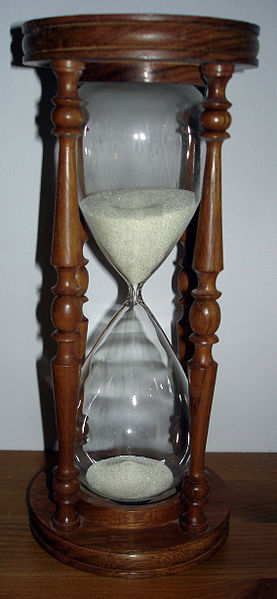
| Image by Martin Olsson |
For some reason, I had this image of an hourglass being really, truly ancient. Like Ancient Egyptian kind of ancient. I’m not sure where that idea came from…probably some movie, LOL. Or maybe just the idea of the sands of time obviously being linked to those desert places…
As it turns out, hourglasses are pretty darn old, but nowhere near ancient. The word–and the device–originated round about 1510. And so, you’d think that an hourglass shape would have come not long after, right? It’s pretty distinctive. And applies so well to the female form, that surely someone made the connection early on. Right?
Wrong. According to etymonline.com, no one thought to call a woman’s figure hourglass until 1897, after corsets had been exaggerating those shapes for half a century. Here’s one of the first written mentions of it:
Men condemn corsets in the abstract, and are sometimes brave enough to
insist that the women of their households shall be emancipated from
them; and yet their eyes have been so generally educated to the approval
of the small waist, and the hourglass figure, that they often hinder
women who seek a hygienic style of dress. [Mary Ashton Rice Livermore,
“The Story of My Life,” 1898]
And since the sands are flowing and I have a book to finish writing today (woot!), I say farewell!



 Roseanna M. White is a bestselling, Christy Award winning author who has long claimed that words are the air she breathes. Having successfully launched two homeschool grads, she now spends her time writing fiction, designing book covers, and pretending her house will clean itself. Roseanna is the author of a slew of historical novels that span several continents and thousands of years, as well as a fantasy series and contemporary mysteries and romances. Spies and war and mayhem always seem to find their way into her books…to offset her real life, which is blessedly ordinary.