
by Roseanna White | Oct 5, 2016 | Giveaways and Contests
I know, I know. I usually have my big book-release giveaway right when the book releases. But I was kinda traveling. And then had to make sure it was going during Bethany House’s next newsletter. So you know–this was the first I could get it up and going. 😉 But it’s worth the wait!
I’m super excited to announce The Manor House Giveaway! This giveaway has been months in the making, carefully selected to coordinate with the books in the Ladies of the Manor series, and is without question my biggest giveaway to date!
One lucky winner will receive:
Word Cloud Classics Books, including:
Twenty Thousand Leagues Under the Sea
Dracul
Adventures of Huckleberry Finn
Great Expectations
The Brothers Grimm: 101 Fairy Tales
The Brothers Grimm, Volume II
The Adventures of Sherlock Holmes
(Several of these books are mentioned in mine–bonus point, ahem, if you know where, LOL.)
Complete Set of the Ladies of the Manor Series
Bone China Tea Set
Winner’s choice of pattern – because nothing says “English setting” like tea!
$25 Teavana Gift Card
So the winner can select her favorite blend, or try something new,
and get any tea balls she might need for the awesome loose leaf varieties she picks.
a Rafflecopter giveaway
Void where prohibited. Chances of winning depend on number of entries.
Contest
open to US and international residents, with the understanding that a
non-US winner may be required to accept substitutions, depending on
availability of products in their country.
Contest will run through 21 October. Winner will have two weeks to claim prizes before another winner is drawn.

by Roseanna White | Sep 29, 2016 | Thoughtful Thursdays
Our Bible studies are famous for getting off track . . . but resulting in some awesome discussions. Last night our study of Daniel led us to a conversation on why people might lose faith–why, specifically, God might put them in a situation where they end up losing faith.
It doesn’t really fit our view of how God works, right? We have all those awesome sayings: God doesn’t give you more than you can handle. God is always going to work things out for your better good.
But is that right? Is that what He actually says?
As my hubby (who loves to ask all the hard questions in our studies) pointed out, God never promises to work things for our good–He promises to work things for THE good. And He certainly never promises not to give us more than we can bear. He just promises to bear it with us, for us, when we turn to Him.
But what if we don’t?
The example that got David asking this was from WWII, when some of the Righteous Among the Nations–the people who had gone out of their way to save Jews during the Holocaust–who had felt God calling them to help, then turned from Him, overwhelmed by the depravity of man and their own ineffectual actions. The Jews recognized them as doing great work, but they didn’t see it. They saw only the horror, and so much of it that they decided that if this was what God had called them to do, then they wanted nothing to do with God anymore.
That’s hard. Right? And optimistic me says, “But surely God drew them back to Him in the end!” But what if these folks really had hardened their heart so much against Him that they didn’t want to turn back? I don’t know if they did. I don’t know if God treats these people in a different way, pouring mercy upon their souls. I don’t know.
But what I do know is that we’re less likely to be one of those people if we have a right view of God.
So often, I think Christians aren’t worshiping God as He is–we’re worshiping God as we want Him to be. We want to think that God is all mercy, when in truth He is also perfect justice. We want to think that God obeys our definition of “fair,” when in reality He probably shakes His head at how limited our definition is. We think in terms of us. We have such a self-centered view of God, of Christianity, that it’s hard for us to fathom that sometimes He asks us to die. He lets loved ones die. True, world-wide tragedy happens.
Yes, God asks us to work in a situation when we never see the good that comes of it.
Why? Because there’s more than we can see. And because it isn’t about us, it’s about the people we’re called to help. It’s about the Kingdom.
Yes, God asks us to trust in Him when men like Hitler are out to obliterate the Good News. When thousands, millions are killed.
Why? Because men have the free will to fight Him and to kill His people in the process. God will “let” that happen . . . but never to the point where it will destroy His Kingdom. Don’t you think Judah cried out at the slaughter at the hands of the Babylonians? That Israel thought God unfair, that He wasn’t worth serving when the Assyrians destroyed them? Yes. I’m sure they did. I’m sure some, whose faith was in their own idea of God, lost that faith.
But the faith itself grew. Exile was what turned Judaism from a general religion to a personal faith. These terrible, awful, never-should-have-happened things were used by God to further the Kingdom, even though it means some lost faith . . . lost faith in their false ideas.
We’ve been studying the ancient world in school, learning about the greatest of the ancient kings. And do you know what made them great? They put the kingdom above all else. Above personal glory. Above love of one individual. They would fight wars or make odd peace treaties to preserve and expand their nation.
God is the BEST king. He is working, always, for the good of the Kingdom. That means making decisions we, as mere peons in His army, don’t understand. It means people will die. It means war and famine and flood and cancer and dictators and atheism and . . . who knows what else. It means some will lose faith. It means more will come to it. It means the wheat will be separated from the chaff. It means so much more than we can fathom.
More, honestly, than most of us want to think about. We want life to be good. To be fair. To be easy. We want our loved ones not to die. We want our children to be perfectly healthy. We want respect and admiration.
Sorry, y’all. God promises us hardship. Disrespect. He promises that brother will turn on brother and father on son. He promises persecution and death and trial.
But He also promises peace and love and Joy and a wisdom the world cannot understand. He promises to lift us above our circumstances–not to change our circumstances.
And that right there is one of the greatest epiphanies I ever had, a few years ago. We don’t serve a God who changes circumstances alone–we serve a God who changes souls. He doesn’t say, “I’ll make the hurtful thing stop.” He says, “I’ll lend you My strength to get through it.”
Sometimes–often–that actually means stripping away the things we thought were important. To get us back to the place where we have only that one truly important thing.
Him.

by Roseanna White | Sep 28, 2016 | Remember When Wednesdays
While in England, I found myself making a list of the little details I hadn’t known. The little things that aren’t wrong in my books, but which aren’t present.
The first to strike me:
I don’t have nearly enough sheep in my stories.
Because seriously. While we were in Salisbury and then the Cotswolds, there were sheep everywhere. According to our host at the B&B, if you have a plot of grass, you just throw some sheep onto it to keep it trim. Apparently wool these days isn’t worth what you have to pay the man to come and sheer them, so all the money in it is in lambing. And, I suppose, whatever you save in lawn mowers. 😉
Not coming from a sheep-rich area, I found this pretty noteworthy. And it also meant I noted things about how they keep the sheep. In many places, there are no fences to keep them in the field–there are instead ditches dug around the pasture, which are called ha-has. Because while the sheep quickly learned to avoid them, unsuspecting humans often don’t pay attention and fall in, to the amusement of their companions.
That was my big revelation in central England. When we went to the West Country and stayed in Cornwall, my revelations were different. Namely, I had way too many trees in the first draft of A Name Unknown.
Now, there are trees in Cornwall to be sure. But they tend not to be near the cliffs of the coast, and I have my estate in the story have coastal property. So I needed to do some rearranging of my fictional estate and move the woods to the opposite end. 😉 At least in the miles we walked or drove through, there’s no emerging from the trees onto the cliffs. Between the two would be a large expanse of scrub, filled with heather and gorse and…
WIND.
Wow. I don’t know if it’s always like this in Cornwall, but every day we were there was crazy-windy. Now, being accustomed to the beach, I knew there would be wind off the water. I had some. But not nearly enough. Much like sheep. 😉 So I turned up the wind and down the trees. And of course had to mention these beauties.
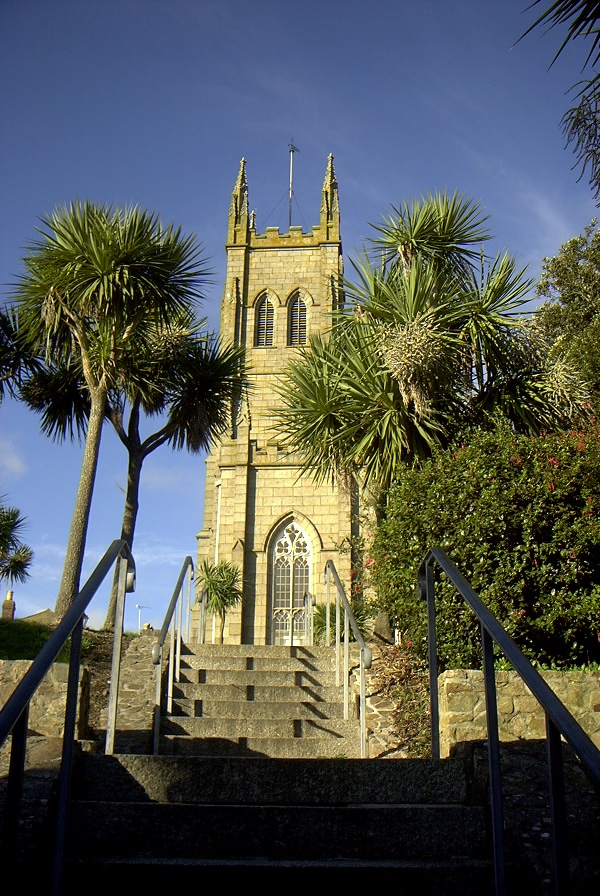
They look like palm trees, and Cornwall is “sub-tropical.” But I put that in quotes, because it means temperate, not warm. Certainly not warm enough for real palms. These are actually a New Zealand species that are also called cabbage trees, as parts of them are edible and were part of the Maori diet. Though they’re commonly referred to as a Cornish palm, and though you’ll see them all over the place in Cornwall, and though they do give you an air of a tropical resort . . . don’t let ’em fool you. “Sunny Cornwall” was gorgeous, but we saw just as much rain as sun when we were there, LOL. Maybe more, actually. Though it certainly didn’t stop us from getting out and enjoying the beauty of this rugged coastline. Cornwall was definitely a LOVE!

by Roseanna White | Sep 22, 2016 | Book News
In each of the first two books of the series, I had third point-of-view character who was the heroine’s lady’s maid. I obviously needed another third character to give us that below-stairs view in this books . . . but I wanted to shake it up a bit. So instead of getting to know the heroine’s maid, I decided we’d get to know the villain’s.
I loved introducing Kira Belova, who introduces us in turn to the mysterious Russian buyer of the diamonds that we’ve heard mentioned since book 1. Well let me just tell you, Andrei Varrenikov is quite the piece of work. And Kira is his mistress (though we never see them in any such situations, don’t worry!). Once the prima ballerina with the famous Ballet Russe, a knee injury has left her broken and desperate to cling to the life she’d worked for. Willing to do anything to keep her pretty Parisian flat and the facade of wealth she’d gained through Andrei.
Even spy for him. Even though it means posing as a maid–a servant’s position her family had worked generations to escape from.
Through Kira, we get a glimpse into Russia before the Bolshevik Revolution. A hint of a very different culture than the English one we’ve otherwise seen. And, I hope, a few surprises. =) It’s also thanks to Kira that we get the 3 scenes in the book set somewhere other than the Cotswolds–PARIS!
Photo of the Eiffel Tower taken by my daughter, by the way. And we crossed right over the Place d’Iena and saw signs for the Guimet, the museum mentioned there! How cool is that?!
Now. Today begins the Celebrate Lit Blog Tour for A Lady Unrivaled, which means lots of chances to get some opinions about the book and enter my giveaway that’s exclusively for Celebrate Lit!
Included in this giveaway is a tin of tea from England. But not just from England. From HRH Prince Charles’s Highgrove Shop–a shop attached to his Cotswold estate, where he’s an avid organic farmer/gardener. (All proceeds from the store go to a charity.) So this isn’t just any tea, this is prince-approved tea. 😉
Here’s the Celebrate Lit line up!

by Roseanna White | Sep 21, 2016 | Book News
I knew it would be a little tricky, making my hero in book 3 a man who wasn’t exactly likeable in the first two books. But that was part of the challenge.
In book 1, we see Cayton marry for money and break the heart of Brook’s cousin. In book 2, we see him newly widowed and overwhelmed by the guilt of having never come to love his wife.
I do have a soft spot for characters who need redemption, and Cayton was certainly one of those! As A Lady Unrivaled begins, he has already repented, he has already determined to be the man God wants him to be . . . he’s just finding it more difficult to accept forgiveness than it had been to ask for it.
Naturally, this is what makes him so much fun!
There’s one going on right now at Overcoming With God! You can also read Noela’s gracious review of the book on that site.
And on Friday, it’s time for another Colonial Quills tea party! Join me on the blog for a giveaway and on our Facebook event for a chat at 12 noon EDT!



 Roseanna M. White is a bestselling, Christy Award winning author who has long claimed that words are the air she breathes. Having successfully launched two homeschool grads, she now spends her time writing fiction, designing book covers, and pretending her house will clean itself. Roseanna is the author of a slew of historical novels that span several continents and thousands of years, as well as a fantasy series and contemporary mysteries and romances. Spies and war and mayhem always seem to find their way into her books…to offset her real life, which is blessedly ordinary.